
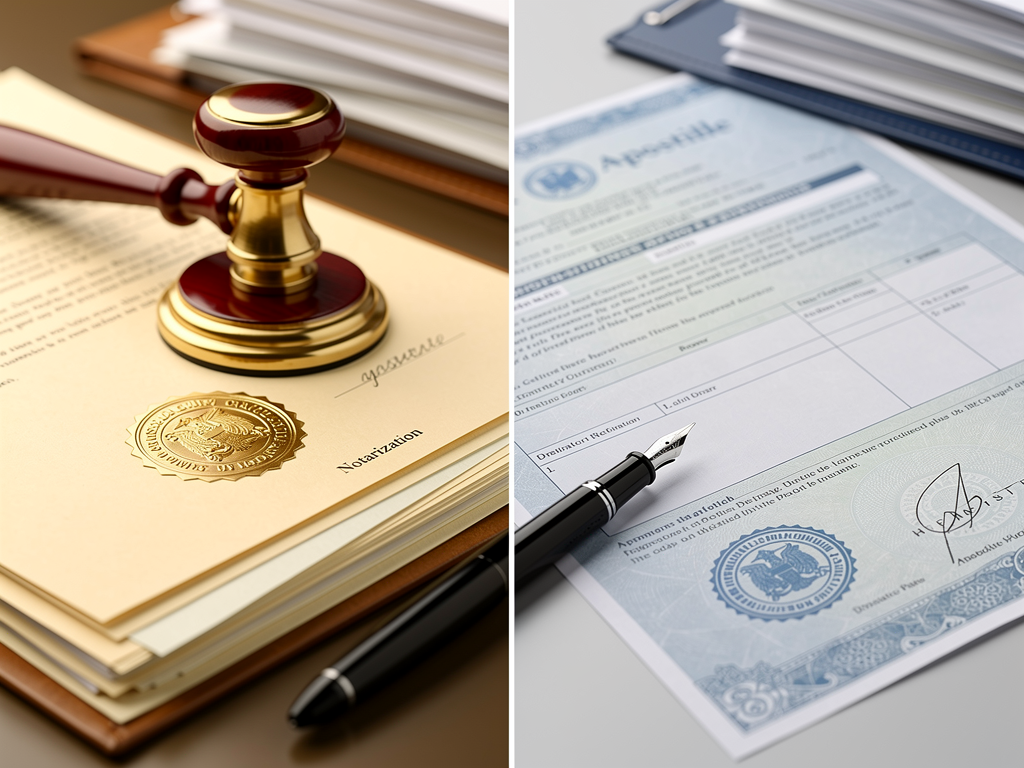
Many people assume that any notary public can handle all types of document authentication, including apostilles. However, this is a common misconception that can lead to delays and complications when dealing with international documents. Understanding the distinction between regular notary services and apostille certification is crucial for anyone needing documents validated for international use.
What is an Apostille and Why is it Different from Notarization?
An apostille is a specialized form of authentication issued under the Hague Convention of 1961. It’s a certificate that verifies the authenticity of documents for use in foreign countries that are members of the Hague Convention. Unlike regular notarization, which simply confirms the identity of a signer and witnesses signatures, an apostille validates the actual notary’s authority and signature.
Key Differences Between Notarization and Apostille
- Notarization is a domestic certification process
- Apostilles are specifically for international document verification
- Regular notaries verify signatures and identities
- Apostilles authenticate the notary’s authority itself
Why Regular Notaries Cannot Issue Apostilles
The short answer is no – regular notaries cannot issue apostilles. This limitation exists for several important legal and jurisdictional reasons:
Legal Authority Restrictions
Regular notaries are commissioned by their state to perform specific duties within that state’s jurisdiction. The authority to issue apostilles is reserved exclusively for designated state officials, typically the Secretary of State’s office or similar state-level department.
International Treaty Requirements
The Hague Convention specifically designates which authorities can issue apostilles. These are called ‘Competent Authorities’ and are typically high-level government offices, not individual notaries.
The Correct Process for Obtaining an Apostille
While a regular notary can’t issue an apostille directly, they still play an important role in the apostille process. Here’s the typical sequence:
- Get your document notarized by a regular notary public
- Submit the notarized document to your state’s designated authority
- The state authority reviews and issues the apostille
- Receive your completed apostille certificate
Common Documents Requiring Apostilles
Understanding which documents typically need apostilles can help you prepare better. Common documents include:
- Birth certificates
- Marriage certificates
- Academic diplomas and transcripts
- Corporate documents
- Power of attorney forms
- Adoption papers
- Background checks
The Role of Notaries in the Apostille Process
While notaries can’t issue apostilles, they serve a crucial function in the process. Their role includes:
Document Preparation
Notaries verify the identity of signers and witness signatures on documents that will later receive an apostille. This initial authentication is a necessary step before obtaining an apostille.
Advisory Services
Many experienced notaries can guide clients about the apostille process and direct them to the appropriate state authorities, even though they can’t perform the service themselves.
State-Specific Requirements and Variations
Each state has its own procedures and requirements for obtaining apostilles. Some key variations include:
- Different processing times
- Varying fee structures
- Specific document requirements
- Different submission methods (mail, in-person, online)
Common Mistakes to Avoid in the Apostille Process
Understanding what not to do is just as important as knowing the correct procedures. Here are some common pitfalls to avoid:
- Assuming any notary can issue an apostille
- Sending documents directly to foreign countries without proper authentication
- Waiting until the last minute to start the process
- Not checking if the destination country is a member of the Hague Convention
Alternative Authentication Methods
For countries not part of the Hague Convention, different authentication processes may be required:
Chain Authentication
This multi-step process involves authentication by various authorities, including:
- County clerk certification
- State authentication
- U.S. Department of State certification
- Foreign embassy or consulate legalization
Time and Cost Considerations
When planning for document authentication, consider these factors:
Processing Times
- Regular notarization: Usually same-day service
- State apostille processing: 2-15 business days
- Expedited services: Additional fees for faster processing
Associated Costs
- Notary fees: Generally $5-15 per signature
- State apostille fees: Typically $10-40 per document
- Expedited processing fees: Can range from $50-200
Conclusion
While regular notaries play an essential role in document authentication, they cannot issue apostilles themselves. Understanding this limitation and knowing the correct process for obtaining an apostille is crucial for anyone dealing with international documents. By following the proper channels and working with appropriate authorities, you can ensure your documents receive the necessary authentication for international use.