

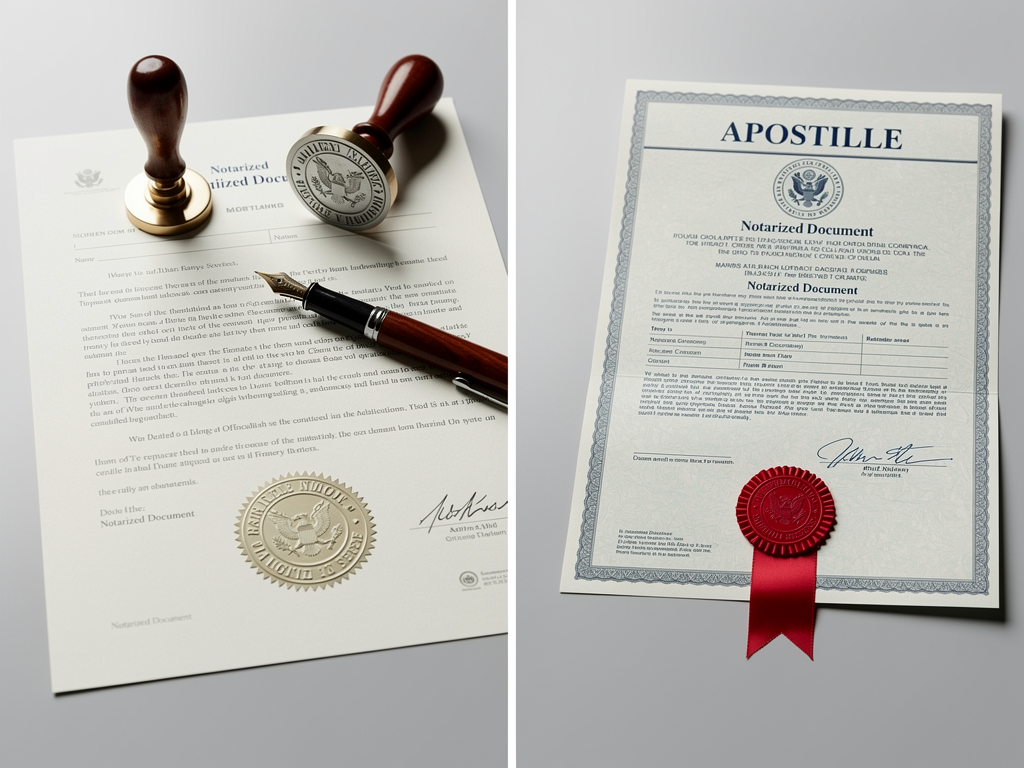
Document authentication can be confusing, especially when dealing with international paperwork. Two terms that often cause confusion are apostille and notary services. While both serve to verify documents, they have distinct purposes, processes, and levels of authority.
What is a Notary Public?
A notary public is a state-appointed official who acts as an impartial witness in various important transactions. Their primary role is to verify the identity of signers and ensure that signatures are willingly made without coercion or fraud.
Key Functions of a Notary Public
- Verifying the identity of document signers
- Witnessing signatures on legal documents
- Administering oaths and affirmations
- Taking acknowledgments
- Certifying copies of certain documents
- Preventing fraud by ensuring signers are acting willingly
Notaries serve as the first line of defense against fraud in many legal and financial transactions. Their services are commonly required for real estate deeds, affidavits, wills, and various contracts.
What is an Apostille?
An apostille is a form of authentication issued to documents for use in countries that participate in the Hague Convention of 1961. It’s essentially a certificate that verifies the authenticity of a document for international use.
Why Apostilles Are Needed
When documents need to be used in a foreign country, an apostille ensures they will be recognized as legitimate. This international certification proves that the document’s signature, seal, or stamp is genuine and comes from a competent authority.
Common documents requiring apostilles include:
- Birth certificates
- Marriage certificates
- Death certificates
- Court documents
- Educational diplomas and transcripts
- Corporate documents
- Power of attorney forms
Key Differences Between Apostille and Notary Services
1. Level of Authentication
A notarization is typically the first step in document authentication. An apostille is a higher level of authentication that often follows notarization. In many cases, a document must be notarized before it can receive an apostille.
2. Geographic Scope
Notary services are primarily recognized within the issuing state or country. Apostilles, however, are recognized internationally among all countries that are members of the Hague Convention.
3. Issuing Authority
Notaries are appointed by state governments and operate at a local level. Apostilles are issued by designated government authorities, usually the Secretary of State’s office or equivalent government department.
4. Purpose
Notarization verifies the identity of signers and witnesses signatures. Apostilles authenticate the seals and signatures of officials on public documents for use abroad.
When Do You Need Each Service?
When to Use a Notary
- Signing real estate documents
- Creating or modifying wills
- Executing power of attorney
- Completing affidavits
- Authenticating signatures on domestic legal documents
When to Use an Apostille
- Conducting international business
- Getting married in another country
- Adopting from abroad
- Studying at foreign universities
- Working overseas
The Process: From Notarization to Apostille
Step 1: Document Preparation
Ensure your document is complete and properly formatted according to both local and international requirements.
Step 2: Notarization
Have the document notarized by a local notary public. This step is often required before obtaining an apostille.
Step 3: Apostille Application
Submit the notarized document to the appropriate authority (usually the Secretary of State) for apostille certification.
Common Misconceptions
Several misconceptions exist regarding apostilles and notarizations:
- Misconception 1: A notarized document is automatically valid internationally
- Misconception 2: All countries accept apostilles
- Misconception 3: Notaries can issue apostilles
- Misconception 4: Apostilles and authentications are the same thing
Cost Considerations
Understanding the costs involved in both processes is important for planning purposes:
Notary Fees
Notary fees are generally regulated by state law and typically range from $5 to $15 per signature or act. Some states allow additional fees for travel or preparation of documents.
Apostille Fees
Apostille fees vary by state and country but typically range from $10 to $50 per document. Additional fees may apply for expedited service or multiple documents.
Tips for Smooth Document Authentication
- Research requirements for your specific situation and destination country
- Allow sufficient time for processing
- Ensure documents are in the correct format
- Keep copies of all original documents
- Verify that your destination country is a member of the Hague Convention
- Consider using professional document authentication services for complex cases
Understanding the differences between apostilles and notary services is crucial for proper document authentication. While notarization serves domestic purposes, apostilles provide international recognition of documents among Hague Convention member countries. Knowing when to use each service can save time, money, and prevent potential legal complications in both domestic and international affairs.