
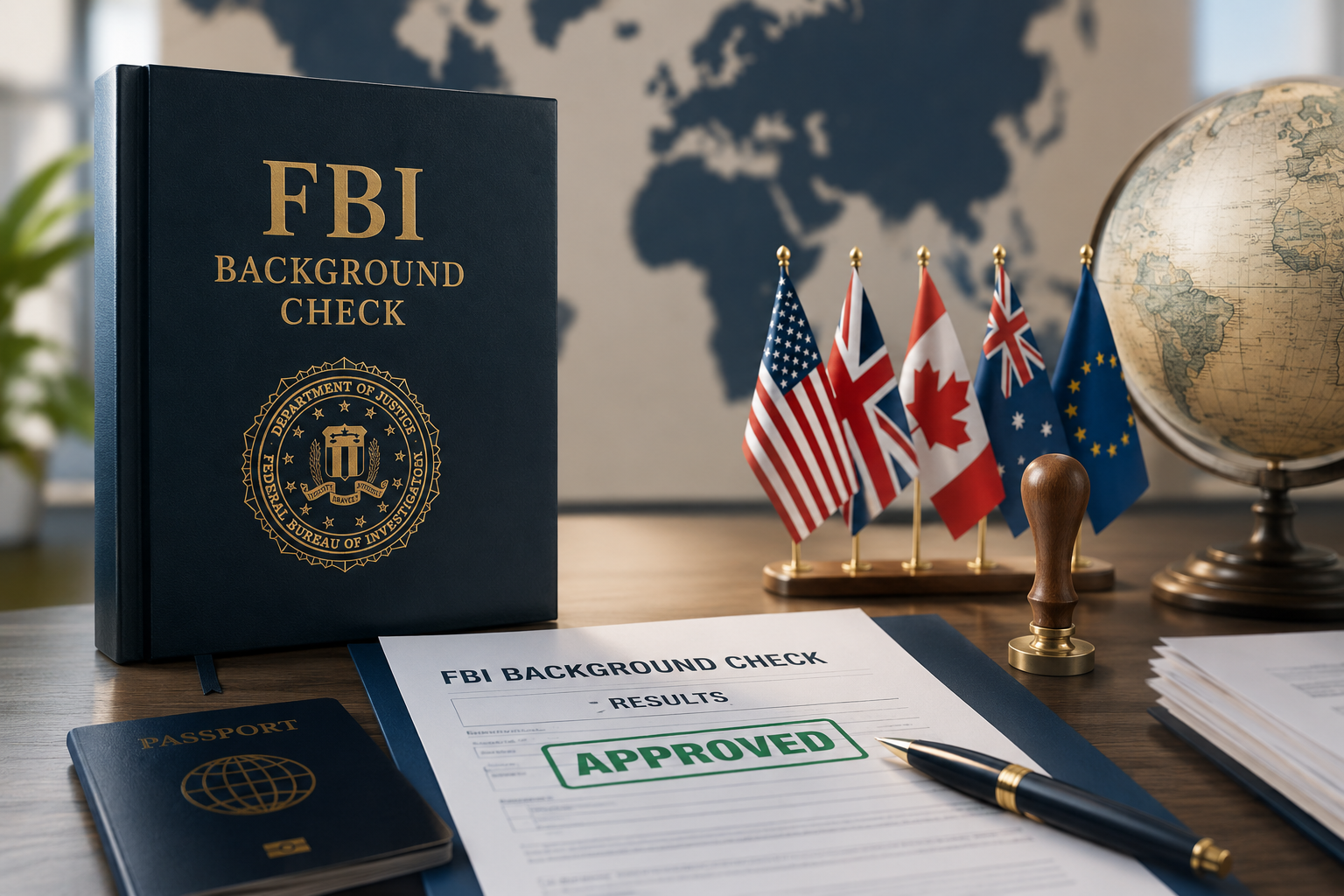
Getting an FBI background check apostille is one of the most important steps for anyone planning to live, work, study, or retire abroad.
Whether you are applying for a work visa, seeking permanent residency, or enrolling in a foreign university, most countries require a certified FBI criminal history report before they approve your application.
This complete 2026 guide walks you through every step of the process, from requesting your FBI report to getting your FBI background check apostille attached and accepted internationally.
What Is an FBI Background Check Apostille?
An apostille is an internationally recognized certification that authenticates the origin of a public document.
When a foreign government asks for your criminal history, they do not simply accept a printed FBI report. They require proof that the document is genuine and that the signature or seal on it belongs to an authorized U.S. government official.
An FBI background check apostille is the certification placed on your FBI Identity History Summary that verifies its authenticity for use in countries that are members of the Hague Apostille Convention.
Once your document carries this certification, it is legally recognized in more than 120 countries without needing any further authentication.
Who Needs an FBI Background Check Apostille?
You likely need an FBI background check apostille if you are:
Applying for a work visa or employment permit in a foreign country.
Seeking permanent residency or citizenship in another nation.
Enrolling in a foreign university or academic institution.
Getting married abroad and your new country requires a criminal clearance certificate.
Retiring overseas under a residency or pensioner visa program.
Adopting a child internationally, where background checks are a standard legal requirement.
Starting a business in another country that conducts due diligence on foreign nationals.
Nearly every country that participates in the Hague Convention will ask for this document at some stage of your immigration or legal process.
Understanding the Hague Apostille Convention
The Hague Apostille Convention was established in 1961. It created a simplified system for authenticating public documents so they could be used across international borders.
Before the convention, getting a document accepted abroad was a lengthy process involving multiple government agencies, embassies, and consulates.
Today, an apostille from a recognized authority in one member country is enough for the document to be accepted in all other member countries.
The U.S. Department of State is the designated competent authority for issuing apostilles on federal documents, which includes the FBI Identity History Summary.
Your FBI background check apostille goes through the U.S. Department of State before it can be used internationally.
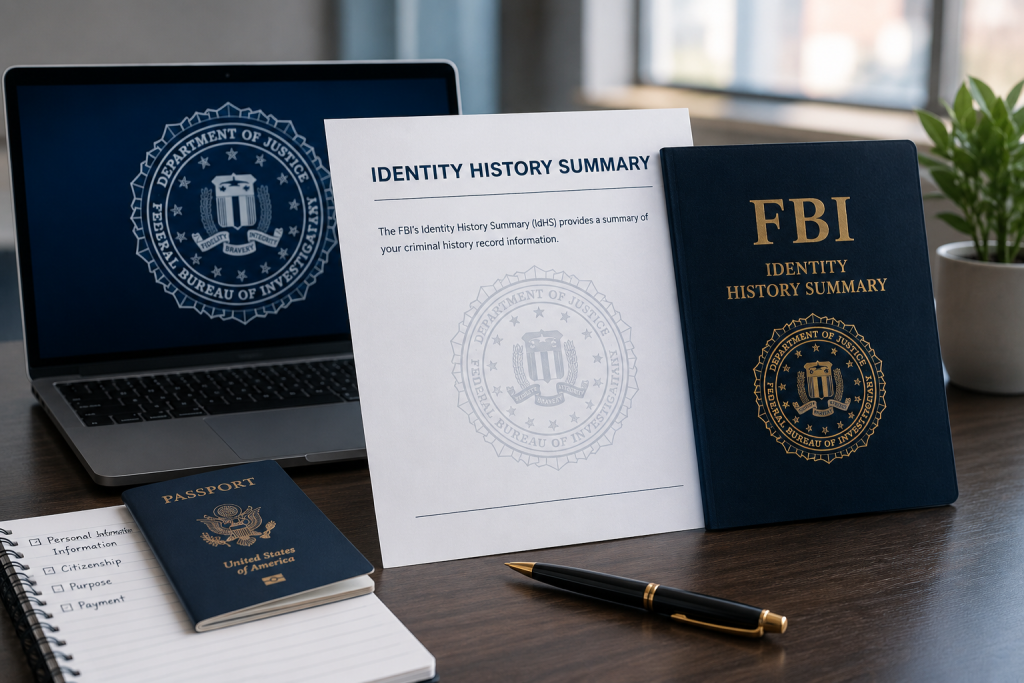
Step One: Obtain Your FBI Identity History Summary
Before you can get an FBI background check apostille, you need the actual FBI report.
The FBI Identity History Summary, also called a criminal history summary or rap sheet, is a record of all fingerprint submissions related to your identity that exist in the FBI database.
There are two ways to request your FBI report.
Option A: Submit Directly to the FBI
You can submit your fingerprints directly to the FBI using their official electronic or ink fingerprint process.
For electronic submissions, you use an FBI approved channeler. These are private companies that the FBI has authorized to collect fingerprints and transmit them electronically.
For ink submissions, you roll your fingerprints on a standard fingerprint card, known as an FD 258 card, and mail it to the FBI along with your payment and a signed Identity History Summary Request form.
Processing times for direct FBI submissions typically range from 3 to 8 weeks, though this can vary depending on current demand and workload.
Option B: Use an FBI Approved Channeler
An approved channeler processes your fingerprints electronically and returns your results much faster, often within 2 to 3 business days.
This is the most popular option for people who are working against immigration or visa deadlines.
A list of FBI approved channelers is available on the official FBI website.
Step Two: Prepare Your Document for Apostille
Once you have your FBI Identity History Summary in hand, the next step is submitting it for apostille authentication.
There are a few things to check before sending your document.
First, make sure your report is an original. The U.S. Department of State does not accept photocopies for apostille purposes.
Second, verify that the document includes a proper certification signature. FBI reports submitted through approved channelers typically come with a certification letter that includes a notarized signature, which is required for the apostille to be attached.
If your document does not have a qualifying signature, it will need to be notarized or certified before it can go to the Department of State.
Third, check the requirements of the destination country. Some countries require your FBI background check apostille to be translated into the local language after authentication. Others may require additional legalization beyond the apostille itself if they are not Hague Convention members.
Step Three: Submit to the U.S. Department of State
The U.S. Department of State Office of Authentications is the federal authority that issues apostilles on federal documents.
To obtain your FBI background check apostille, you submit your certified FBI report to the Office of Authentications along with the required fee and a cover letter that includes your return mailing address and the destination country.
Processing Options
The Office of Authentications currently offers two processing tiers.
Routine processing takes approximately 6 to 8 weeks.
Expedited processing takes approximately 1 to 2 weeks and comes with a higher fee.
You can submit your documents by mail or by in person drop off at their Washington D.C. office if you are located near the area.
What the Apostille Looks Like
The apostille itself is a standardized certificate, typically a stamp or attached page, that includes the name of the signatory, their official capacity, the seal of the issuing authority, the place and date of issue, and a unique identifying number.
This certificate is what foreign governments use to confirm that your document is legitimate.
How Long Does the Entire Process Take?
The total time to complete an FBI background check apostille from start to finish depends on which route you choose.
If you use an FBI approved channeler and pay for expedited processing at the Department of State, you can complete the entire process in as little as 2 to 4 weeks.
If you submit directly to the FBI and use routine processing at the Department of State, the process can take anywhere from 10 to 16 weeks.
Planning ahead is critical. Immigration agencies, foreign employers, and universities typically have hard deadlines, and missing them due to delays in the apostille process can set back your plans significantly.
It is always recommended to start your FBI background check apostille process at least three to four months before your application deadline if possible.
How Much Does It Cost?
Costs for an FBI background check apostille vary depending on the service providers you use.
FBI Identity History Summary
Direct FBI submission costs $18 per request.
Approved channeler fees vary but typically range from $50 to $75 in addition to any fingerprinting fees charged locally.
Fingerprinting
Live Scan fingerprinting fees vary by location and service provider, generally ranging from $20 to $60.
Ink fingerprint card services are often available at law enforcement offices, UPS stores, and private fingerprinting companies for a similar cost.
U.S. Department of State Apostille
Routine processing costs $20 per apostille as of 2026.
Expedited processing carries an additional fee on top of the base rate.
Professional Apostille Service
If you use a professional apostille service like ApostilleAuthentications.com, the entire process is handled on your behalf.
Professional services manage the submission, track your documents, and return the completed FBI background check apostille to you without requiring you to navigate the process alone.
Countries That Commonly Require an FBI Apostille
Many countries request an FBI criminal history report with apostille as part of their immigration or residency process.
Some of the most common destination countries include:
Italy requires a clean criminal record certificate apostille for the elective residency visa and citizenship applications.
Spain requests criminal background clearance with apostille for long term visas and residency permits.
Portugal has made this a standard requirement for its popular D7 passive income visa and the Golden Visa program.
Mexico requires apostilled background checks for temporary and permanent residency applications.
Colombia requests apostilled criminal records for certain visa categories.
South Korea asks for apostilled FBI reports for employment visas in specific industries.
United Arab Emirates requests criminal background clearance as part of the work permit process for many nationalities.
Australia may require an FBI report apostille depending on your visa class and length of stay.
Knowing the specific requirements of your destination country before you begin the process helps you avoid delays and rejections.
Non Hague Convention Countries
Not all countries are members of the Hague Apostille Convention.
If your destination country is not a member, an apostille alone is not sufficient. You will need to go through a process called legalization or authentication, which typically involves:
Getting your document certified by the U.S. Department of State.
Then having it authenticated by the embassy or consulate of the destination country in the United States.
An apostille service provider can advise you on whether your destination country requires legalization instead of or in addition to an apostille.
Always verify the requirements directly with the foreign government or their embassy before submitting your documents.
Common Mistakes to Avoid
Many applicants run into delays or rejections because of avoidable errors in the FBI background check apostille process.
Submitting Photocopies
The Department of State and most foreign governments require original certified documents. Never submit a photocopy.
Using an Expired Report
Many countries set a validity window on background check documents, typically six months from the date of issue. Always check the expiration policy of your destination country before you begin.
Wrong Country Listed on the Cover Letter
The apostille is issued for use in a specific country. If your cover letter lists the wrong destination, your document may be rejected by the receiving government.
Forgetting the Translation Requirement
Some countries require your apostilled document to be translated into their official language by a certified translator. Skipping this step can cause your application to be rejected even after your apostille is in order.
Not Using a Certified Fingerprint Provider
The FBI only accepts fingerprints that meet specific quality standards. Using an uncertified fingerprint provider can result in rejected submissions and delays.
Why Use a Professional Apostille Service?
Navigating the FBI background check apostille process on your own is entirely possible, but it comes with risks.
Government processing times fluctuate. Requirements change. Submission errors lead to rejection without refund of your time or fees.
A professional apostille service removes these risks.
At ApostilleAuthentications.com, we handle the entire authentication process from document verification to Department of State submission and final delivery.
Our team stays current on all federal processing requirements, country specific rules, and translation needs so your documents are prepared correctly the first time.
We track your documents throughout the process and keep you informed every step of the way.
Whether you need a single apostille urgently or you are coordinating a full package of documents for an international move, we are equipped to help.
Frequently Asked Questions
How long is an FBI apostille valid?
The apostille itself does not expire, but many countries require that the underlying FBI report be issued within the past six months. Always check with the receiving country for their specific validity requirements.
Can I get an apostille on an FBI report I already have?
Possibly. It depends on how the report was issued and whether it carries the necessary certification. Reports issued through an approved channeler with a notarized letter are typically eligible. Contact a professional service to review your existing document before submitting.
Does every country accept an FBI apostille?
Countries that are members of the Hague Apostille Convention accept it. Countries that are not members require a different process called legalization. Always verify before you apply.
What if my FBI report shows a record?
An apostille certifies the authenticity of your document, not its content. If your report shows a criminal history, it will be apostilled and submitted as is. Immigration outcomes depend entirely on the policies of the destination country.
Can I apostille other documents at the same time?
Yes. If you need apostilles on birth certificates, marriage certificates, or other federal or state documents, many apostille services can handle multiple documents in a single order.
Final Thoughts
The FBI background check apostille process is one of the most critical steps in any international immigration, employment, or residency application.
Understanding the steps, planning your timeline carefully, and avoiding common errors will help you move through the process efficiently and without costly setbacks.
If you want the process handled by experts who manage these submissions every day, visit ApostilleAuthentications.com to get started.
We make sure your documents are prepared, submitted, and delivered correctly so you can focus on the next chapter of your journey abroad.