Apostille Documents: Your Complete Guide to International Document Authentication

blog feature 6

Navigating international document requirements can be complex, especially when dealing with official paperwork that needs to be recognized across borders. Understanding apostilles – what they are, when you need them, and how to obtain them – is crucial for anyone dealing with international legal, business, or personal matters.

What Is an Apostille?

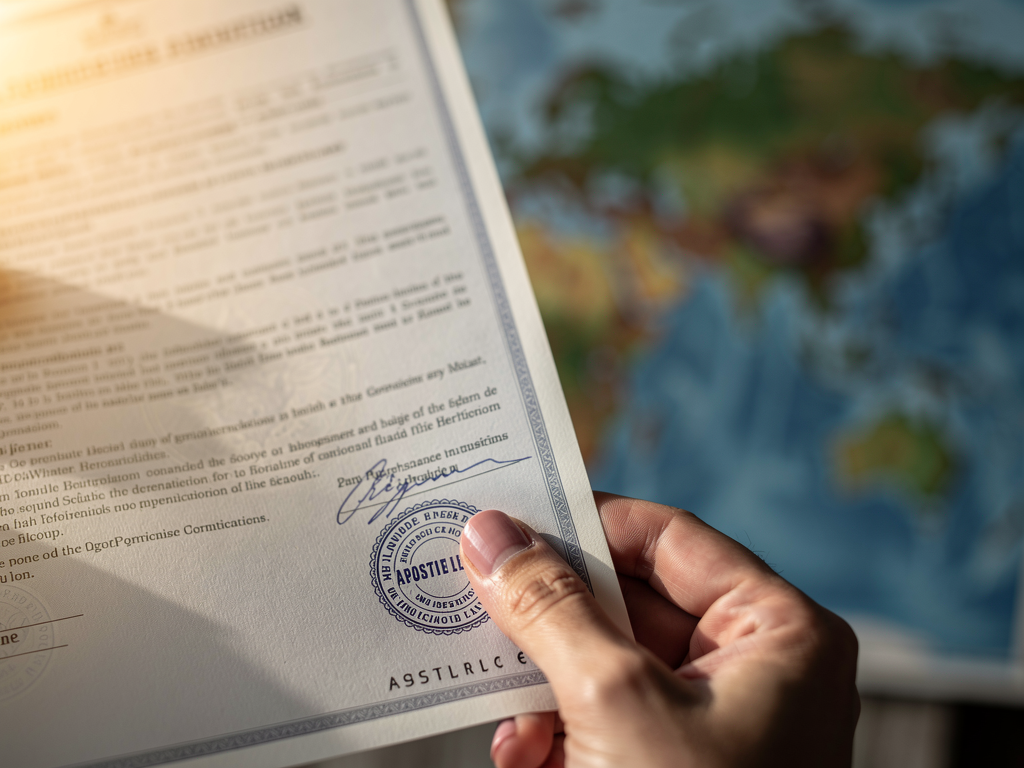
An apostille is a specialized certificate that authenticates the origin of a public document for use in another country. It’s essentially an international notarization that verifies the authenticity of signatures, seals, and stamps on official documents. The apostille certification was established by the Hague Convention of 1961 to simplify the process of document authentication between member countries.

Key Features of an Apostille

  • A standardized certificate recognized by all member countries
  • Contains a unique identifying number
  • Validates the authenticity of the document’s origin
  • Includes the signature and seal of the issuing authority
  • Usually appears as an additional page or stamp on the original document

When Do You Need an Apostille?

Apostilles are required in numerous situations when documents need to be used officially in another country. Here are the most common scenarios:

Personal Documents

  • Birth certificates – For immigration, dual citizenship, or marriage abroad
  • Marriage certificates – For legal recognition of marriage in another country
  • Death certificates – For inheritance claims or legal proceedings abroad
  • Divorce decrees – For remarriage in another country or legal purposes
  • Educational documents – For studying or working abroad

Business Documents

  • Company registration documents – For establishing business presence abroad
  • Power of attorney – For conducting business transactions in other countries
  • Commercial contracts – For international business agreements
  • Patent applications – For international intellectual property protection
  • Corporate documents – For opening foreign subsidiaries or branches

The Apostille Process

Obtaining an apostille involves several steps and varies slightly depending on your location and the type of document. Here’s the general process:

  1. Document Preparation – Ensure your document is original or a certified copy
  2. Notarization – Some documents require notarization before apostille
  3. Submission – Apply to the appropriate authority (usually Secretary of State’s office)
  4. Processing – Wait for verification and apostille issuance
  5. Receipt – Collect or receive your apostilled document

Countries That Accept Apostilles

Not all countries participate in the Hague Apostille Convention. Currently, over 120 countries are members of the convention. When dealing with non-member countries, different authentication procedures may be required.

Major Participating Countries Include:

  • United States and most European Union countries
  • United Kingdom and Commonwealth nations
  • Most South American countries
  • Many Asian and African nations
  • Australia and New Zealand

Common Misconceptions About Apostilles

Several misconceptions exist about apostilles that can cause confusion:

Important Clarifications

  • An apostille is not a translation service
  • Documents may still need to be translated separately
  • Not all documents qualify for apostille certification
  • Apostilles have no expiration date
  • The process cannot be completed online (though you can start the application online)

Cost and Timeline Considerations

The cost and time required to obtain an apostille vary by jurisdiction and urgency:

Typical Costs Include:

  • Basic apostille fee ($15-$50 per document)
  • Notary fees if required ($5-$15 per signature)
  • Expedited processing fees (optional)
  • Shipping and handling charges

Processing Times:

  • Standard processing: 5-10 business days
  • Expedited service: 1-3 business days
  • Same-day service: Available in some jurisdictions

Tips for Successful Apostille Applications

To ensure a smooth apostille process, consider these essential tips:

  • Verify document requirements before submission
  • Ensure all signatures are original
  • Make copies of all documents before submission
  • Allow sufficient processing time
  • Use tracked shipping methods

Special Considerations and Challenges

Some situations require additional attention when obtaining apostilles:

Complex Scenarios:

  • Documents from multiple countries
  • Urgent or emergency situations
  • Damaged or altered documents
  • Historical or archived documents
  • Electronic or digital documents

Conclusion

Understanding apostilles is crucial for anyone dealing with international document requirements. While the process may seem daunting, proper preparation and knowledge of the requirements can make it manageable. Remember to verify specific requirements for your destination country and allow adequate time for processing to ensure a smooth experience.

Accurate Birth Certificate Translation: Top Online Services for a Seamless Experience

blog feature 5

Introduction to Birth Certificate Translation

Translating a birth certificate is a crucial step for individuals who need to use their document in a foreign country, whether for immigration purposes, marriage, education, or employment. The process involves converting the original document from one language to another, ensuring that all information, including names, dates, and places, is accurately represented. Given the importance of this document, selecting a reliable online translation service is paramount to avoid any potential issues or delays.

Importance of Accurate Translation

The accuracy of a birth certificate translation is critical because even the smallest mistake can lead to the rejection of the document by authorities. This not only causes inconvenience but can also lead to significant delays in whatever process the translation is required for. Therefore, it’s essential to choose a service that guarantees high-quality translations performed by skilled and experienced translators.

Key Factors to Consider

When looking for an online service to translate a birth certificate, several factors should be considered to ensure the service meets your needs and provides a reliable translation. These include the service’s reputation, the qualifications and experience of the translators, the languages supported, the turnaround time, and the cost. Additionally, the security and confidentiality of your documents are paramount, so look for services that have robust privacy policies and secure uploading and storage systems.

Reliable Online Translation Services

Several online services stand out for their reliability, quality of work, and customer satisfaction. These services often have a team of professional translators who are not only fluent in the target languages but also have experience with legal and official documents, ensuring that the translations are not only accurate but also appropriate for their intended use.

  • Rev.com: Known for its fast turnaround times and affordable prices, Rev.com offers translations performed by a network of skilled freelancers. They support a wide range of languages and have a user-friendly platform for uploading documents and tracking orders.
  • Google Translate: While not suitable for official documents due to potential inaccuracies, Google Translate can be a useful tool for informal translations or to get an idea of what your document says in another language. However, for official purposes, a professional service is recommended.
  • Day Translations: This service boasts a large team of translators who can handle birth certificates and other legal documents. They emphasize confidentiality and have a system in place for urgent translations, making them a good option for those with time-sensitive needs.
  • GTS Translation: With a focus on precision and timely delivery, GTS Translation offers certified translations suitable for official use. They have experience with a variety of documents, including birth certificates, and support numerous languages.

Certification and Notarization

For many official purposes, a birth certificate translation must be certified and, in some cases, notarized. A certified translation is accompanied by a certificate of accuracy, signed by the translator or the translation company, stating that the translation is accurate and complete. Notarization involves a notary public verifying the identity of the signer (in this case, the translator) and witnessing the signing of the certificate of accuracy. Ensure that the service you choose offers these options if they are required for your intended use.

Cost and Turnaround Time

The cost of translating a birth certificate can vary widely depending on the service, the language pair, the complexity of the document, and the turnaround time. While it’s tempting to opt for the cheapest option, consider the potential consequences of a low-quality translation. Faster turnaround times often come at a higher cost, but for urgent needs, the expedited service may be necessary. Always check the pricing and estimated completion time before placing an order.

Conclusion

Translating a birth certificate is a significant step in various life events, and choosing the right online service can make a substantial difference in the efficiency and success of the process. By considering factors like reputation, translator qualification, language support, and security, you can find a reliable service that meets your needs. Remember, the goal is not just to translate the document but to ensure it is accepted by the relevant authorities, making the selection of a high-quality translation service indispensable.

Obtaining an Apostille from the FBI: A Comprehensive Guide to Costs and Requirements

blog feature 4

Introduction to Apostille Services

When dealing with international document legalization, the term ‘apostille’ is commonly encountered. An apostille is a form of authentication issued to documents for use in countries that participate in the Hague Convention of 1961. It verifies the authenticity of the signature and the capacity of the person who signed the document, making it a crucial step for individuals and businesses engaging in cross-border activities. One of the key authorities involved in this process in the United States is the Federal Bureau of Investigation (FBI). This article aims to provide a detailed overview of the costs associated with obtaining an apostille from the FBI and guide you through the necessary steps and requirements.

Understanding the Apostille Process

The process of obtaining an apostille involves several steps, starting from preparing the documents to be apostilled, getting them notarized if necessary, and then submitting them to the appropriate authority for authentication. In the context of the FBI, the most common reason for obtaining an apostille is for the authentication of FBI background checks or other documents issued by the FBI.

FBI Background Check

An FBI background check, also known as an Identity History Summary, is often required for foreign travel, work, or residency. The process involves submitting fingerprints to the FBI for a thorough background check. Once the report is generated, if it needs to be used abroad, it may require an apostille. The cost for an FBI background check itself can vary but typically includes the cost of fingerprinting and the FBI’s processing fee, which is currently $18 for an individual’s background check. Additional costs may include the fee for fingerprint rolling and any expedited service fees.

Costs Associated with Obtaining an Apostille from the FBI

The cost to obtain an apostille for an FBI-issued document can be broken down into several components:

  • FBI Processing Fee: As mentioned, the FBI charges a fee for processing background checks. However, this does not include the apostille fee itself.
  • Apostille Fee: The fee for the apostille is typically charged by the Secretary of State of the state from which the document originates or a specialized apostille service if you’re using one. The cost can vary by state, ranging from $10 to $50 per document, though prices are subject to change.
  • Expedited Service Fees: Both the FBI and the Secretary of State’s office may offer expedited services for an additional fee, which can significantly reduce the processing time for urgent requests.
  • Courier and Notarization Fees: Depending on your location and the service you use, there may be additional fees for courier services to send and receive your documents and for notarization if your documents require it.

Navigating the Process

Given the complexity and variability of costs and processing times, it’s essential to navigate the process efficiently. Here are some steps and tips:

  1. Ensure your documents are ready for apostille. This includes having them notarized if necessary and making sure they are the originals or certified copies as required by the issuing authority.
  2. Submit your request to the FBI for a background check if that’s the document you need an apostille for. Use the official FBI channels or an FBI-approved channeler to expedite the process.
  3. Once you have your document, determine the appropriate state from which to obtain the apostille. This could be the state where the document was issued or where you reside.
  4. Submit your document for apostille, either directly to the Secretary of State or through an apostille service. Be sure to follow the specific instructions for submission, including any particular forms or fees required.

Conclusion

Obtaining an apostille from the FBI for your documents involves understanding the process, preparing your documents correctly, and being aware of the costs involved. The total cost can range from under $100 for a straightforward, non-expedited service to several hundred dollars if expedited services are used. It’s crucial to plan ahead, considering the processing times and the specific requirements for your situation. Whether you’re dealing with personal or business documents, ensuring you follow the correct procedures will save time and reduce potential complications in the long run.

Apostille Documents: A Comprehensive Guide to Authentication

blog feature 3

An apostille is a special kind of authentication that is used to verify the authenticity of documents for use in countries that are part of the Hague Convention. The Apostille Convention, signed in 1961, aims to simplify the process of authenticating documents across international borders. If you are planning to study, work, or conduct business abroad, it’s crucial to understand what documents require an apostille. In this article, we will delve into the various types of documents that need to be apostilled and the process of obtaining an apostille.

Types of Documents That Require an Apostille

Not all documents need an apostille, but those that do generally fall into specific categories. These include:

  • Birth and Death Certificates: For inheritance, marriage, or other legal purposes, these documents often need to be apostilled to be recognized abroad.
  • Marriage Certificates: Essential for spousal visas, inheritances, and legal proceedings in another country.
  • Divorce and Annulment Documents: Required for remarriage, child custody cases, or other legal matters in a foreign country.
  • Adoption Papers: Needed for international adoptions to prove the legitimacy of the adoption process.
  • Diplomas and Transcripts: For foreign job applications or university admissions, educational documents must be apostilled to verify their authenticity.
  • Power of Attorney: Essential for conducting business or managing properties in another country.
  • Business Documents: Articles of incorporation, certificates of good standing, and other corporate documents may require an apostille for international business transactions.

Why Are Apostilles Necessary?

Apostilles are necessary because they provide a uniform method of authentication that is recognized by all countries that are party to the Hague Convention. This simplifies international transactions and document recognition, ensuring that documents issued in one country can be used in another without the need for further legalization through the embassy or consulate of the destination country.

The Apostille Process

Obtaining an apostille involves several steps:

  1. Prepare Your Document: Ensure the document is an original or a certified copy issued by the relevant authority.
  2. Notarization: Some documents may require notarization before they can be apostilled.
  3. Submit for Apostille: The document is then submitted to the competent authority in the country of origin for apostille. This is usually the Secretary of State or a similar state or national department.
  4. Receive the Apostille: Once the document is verified, an apostille certificate is attached to it, confirming its authenticity.

Conclusion

In conclusion, understanding which documents require an apostille is crucial for anyone dealing with international transactions, relocation, or business expansion. The apostille process, while it may seem complex, is designed to facilitate the use of documents across borders, ensuring that your documents are recognized and respected internationally. Always check the specific requirements for the country where your documents will be used, as regulations can vary.

Does an FBI background check need to be notarized for an apostille?

FBI apostille notarization

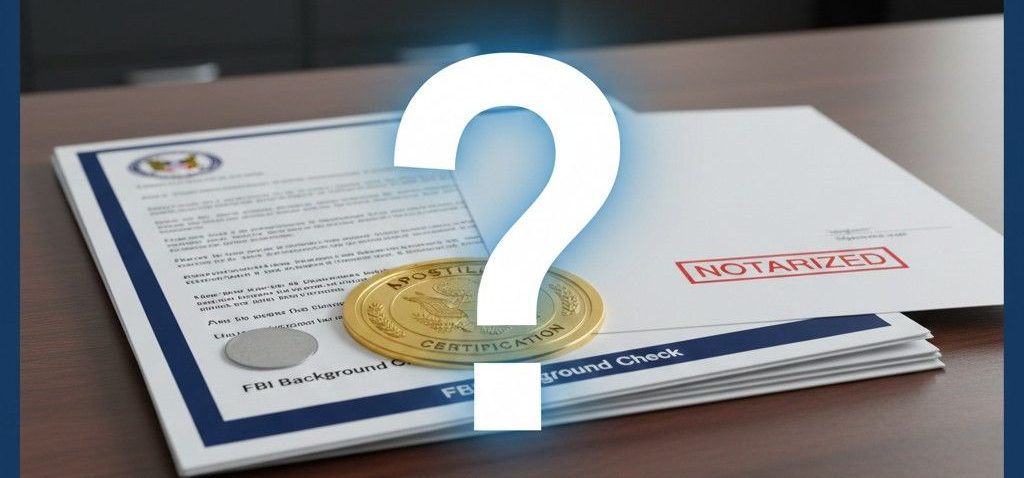
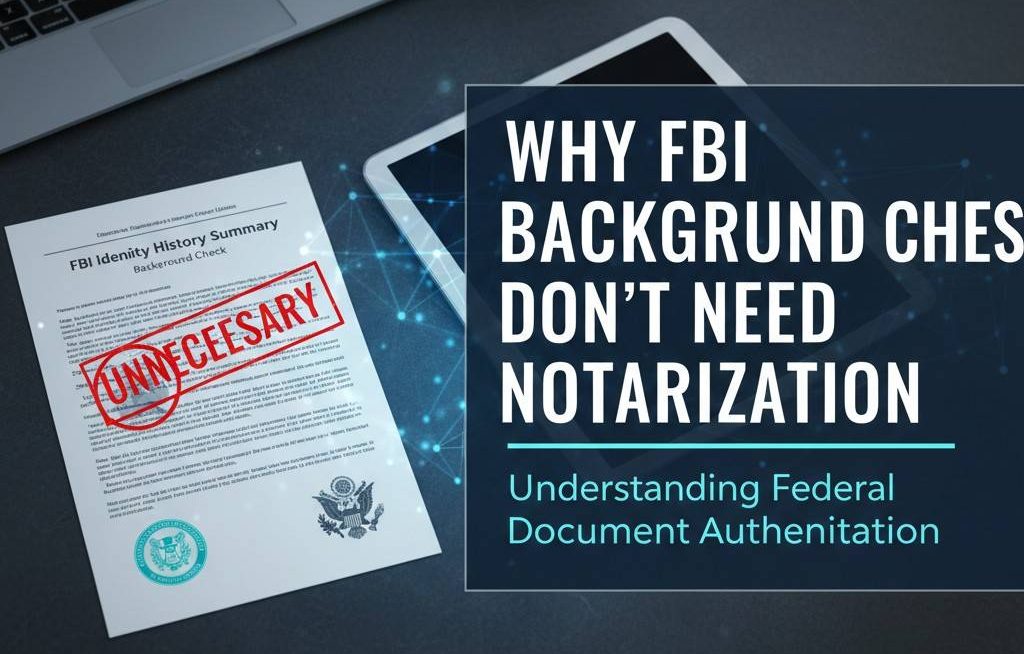
Understanding FBI apostille notarization requirements can be confusing for those navigating international document authentication. The short answer is no—FBI background checks typically do not need notarization before obtaining an apostille. However, the complete picture involves several important considerations that affect how you prepare your documents for international use.

At Apostille Authentications in Oregon, we specialize in helping clients navigate the complex world of document legalization. This comprehensive guide explains everything you need to know about FBI apostille notarization and getting your FBI background check authenticated for use abroad.

Understanding FBI Apostille Notarization Basics

An FBI background check, officially known as an Identity History Summary, is a federal document issued directly by the Federal Bureau of Investigation. The question of FBI apostille notarization stems from confusion about document authentication requirements.

The FBI issues these background checks on official letterhead with a unique document number and authorized signature. Because the FBI is a federal agency, their documents carry inherent authenticity that doesn’t require additional notarization.

An apostille is a certificate that authenticates the origin of a public document for use in countries that are members of the Hague Apostille Convention. The apostille certifies the signature, seal, or stamp on the document as genuine.

For FBI background checks, the apostille is issued by the U.S. Department of State in Washington, D.C. This is the only authority that can apostille federal documents, including FBI Identity History Summaries.

Understanding this distinction is crucial when determining if FBI apostille notarization is part of your document preparation process or if you can proceed directly to authentication.

FBI apostille notarization

Why FBI Apostille Notarization Isn’t Required

Federal documents like FBI background checks already possess the official seals and signatures necessary for apostille authentication. FBI apostille notarization is generally unnecessary because notarization serves a different purpose.

Notarization verifies that a person signing a document is who they claim to be and that they signed voluntarily. FBI background checks are not personally signed documents—they’re official reports generated by a federal agency.

The FBI seal and the authorized signature of FBI officials provide the authentication needed for the U.S. Department of State to issue an apostille. Adding notarization wouldn’t enhance the document’s legitimacy and could actually complicate the process.

Some individuals mistakenly believe FBI apostille notarization is mandatory because they’ve had to notarize other documents for international use. State-issued documents like birth certificates or diplomas may require different authentication steps.

The key is understanding that federal documents follow a different authentication pathway than state or locally issued documents. This distinction determines whether FBI apostille notarization is part of your document preparation process.

The Correct Process for FBI Apostille Authentication

Obtaining an apostille for your FBI background check involves specific steps that don’t typically include FBI apostille notarization. First, you must request your FBI Identity History Summary directly from the FBI.

You can obtain your FBI background check through several methods: online through an FBI-approved channeler, by mail using fingerprint cards, or through an FBI-authorized live scan facility. Each method results in the same official document.

Once you receive your FBI background check, the document must be original and recently issued. The U.S. Department of State typically requires FBI background checks to be recent, often within the last six months, though specific timeframes vary by destination country.

Submit your original FBI background check to the U.S. Department of State’s Office of Authentications in Washington, D.C. This office exclusively handles apostilles for federal documents, so understanding this routing prevents delays.

The State Department reviews the FBI seal and signature, verifies authenticity, and attaches the apostille certificate to your document. This process typically takes two to three weeks, though expedited services are available.

Professional apostille services like Apostille Authentications can handle this entire process on your behalf, ensuring proper submission and faster processing times than individual applications.

When FBI Apostille Notarization Might Apply

While FBI apostille notarization isn’t standard procedure, certain situations may involve notarized documents alongside your FBI background check. Understanding these scenarios prevents confusion about requirements.

Some destination countries require affidavits or declarations to accompany FBI background checks. These supporting documents—sworn statements about your criminal history or character—do require notarization before apostille.

If you’re submitting a photocopy of your FBI background check instead of the original, some countries accept notarized copies with an apostille on the notary’s signature rather than on the FBI document itself.

Translations of FBI background checks into foreign languages often require notarization by a certified translator before the notary’s signature can be apostilled. This is separate from apostilling the original FBI document.

Application forms or cover letters for visa applications or foreign employment might need notarization. These documents are distinct from your FBI background check, though they may be submitted together.

Understanding which documents in your application package require FBI apostille notarization versus which need direct apostille prevents unnecessary steps and expenses.

FBI apostille notarization

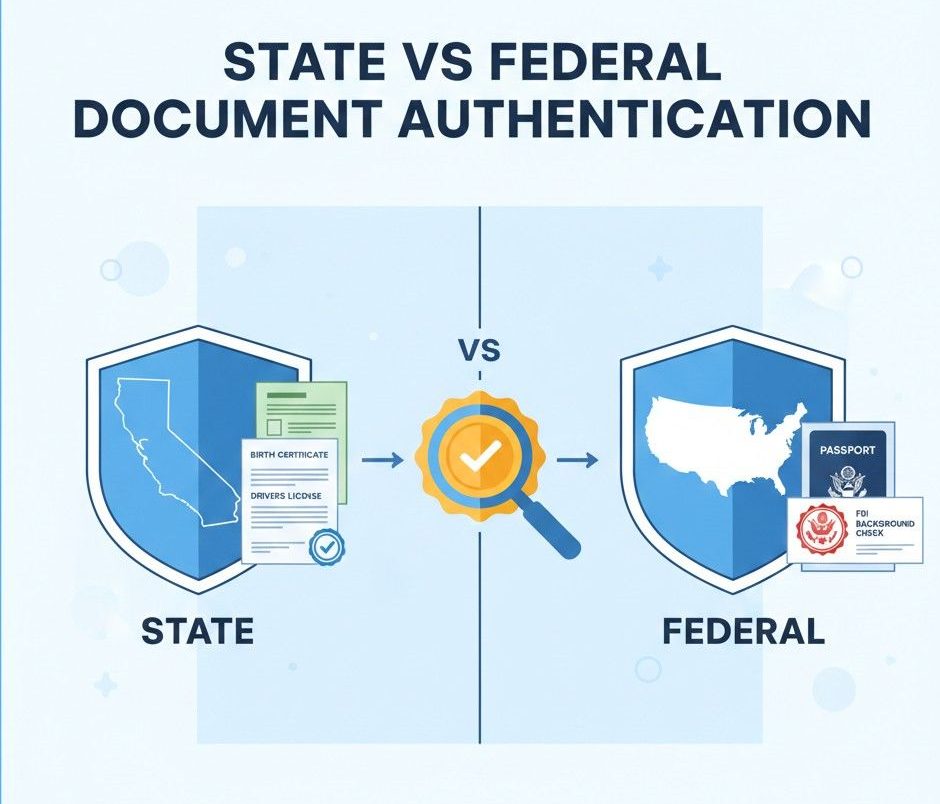
State vs Federal Document Authentication Differences

The confusion about FBI apostille notarization often arises from differences between state and federal document authentication processes. These pathways diverge significantly.

State-issued documents like birth certificates, marriage licenses, or educational diplomas require state-level apostille. Your document must first be certified by the appropriate state authority before receiving the state’s apostille.

Many state documents require notarization or county clerk certification before the Secretary of State can issue an apostille. This multi-step process differs entirely from federal document authentication.

Federal documents, including FBI background checks, passport certifications, and military records, bypass state-level authentication entirely. They go directly to the U.S. Department of State for apostille.

This is why FBI apostille notarization isn’t necessary—it’s already a federal document with federal authority. Adding state-level notarization wouldn’t provide any additional authentication value.

Understanding your document’s origin determines the correct authentication pathway. Mixing state and federal processes causes delays and potential rejections of your apostille application.

Common Destination Country Requirements

Different countries have varying requirements for FBI background checks, though the question of whether FBI apostille notarization is needed generally receives the same answer: no, notarization isn’t required.

Spain commonly requests FBI background checks with apostilles for visa applications, residency permits, and work authorizations. Spanish authorities accept apostilled FBI checks without additional notarization.

China requires authentication for FBI background checks, though China is not a Hague Convention member. FBI checks destined for China need authentication from the U.S. Department of State followed by legalization at the Chinese Embassy or Consulate.

The United Arab Emirates requests apostilled FBI background checks for employment visas and residency applications. UAE authorities accept the standard State Department apostille without requiring FBI apostille notarization first.

Mexico uses apostilles extensively for legal proceedings, adoptions, and residency applications. Mexican authorities recognize apostilled FBI background checks as authentic without requiring notarization.

European Union countries participating in the Hague Convention accept apostilled FBI background checks for employment, education, and immigration purposes. The standard apostille process suffices without FBI apostille notarization.

Always verify current requirements with your destination country’s embassy or the requesting institution. While FBI apostille notarization isn’t standard, specific cases might have unique requirements.

How Professional Apostille Services Help

Navigating questions about FBI apostille notarization becomes simpler with professional assistance. Apostille Authentications specializes in federal document authentication.

Our Oregon-based team understands the nuances of State Department requirements and can quickly determine if your specific situation requires any steps beyond standard apostille processing.

We handle submission to the U.S. Department of State, tracking your documents through the authentication process and ensuring compliance with all current regulations. This eliminates guesswork about whether FBI apostille notarization is needed.

Professional services expedite processing through established relationships with the State Department. What might take individuals three to four weeks can often be completed in days through professional channels.

We also provide guidance on supporting documents that might require notarization alongside your FBI background check. Understanding your complete document package ensures nothing is overlooked.

For documents requiring both apostille and embassy legalization for non-Hague countries, we coordinate the entire process. This comprehensive service saves time and prevents costly mistakes.

Timeline Considerations for FBI Apostilles

Understanding processing timelines helps you plan when you need FBI apostille notarization—or more accurately, when you need your FBI check apostilled without notarization.

Obtaining your FBI background check takes one to three days through approved channelers, or three to fourteen weeks through the traditional mail method. This initial step is often the longest part of the process.

U.S. Department of State processing for apostilles typically requires two to three weeks for standard service. Expedited service reduces this to a few business days but costs significantly more.

Shipping time to and from the State Department adds additional days to your timeline. Professional services often use expedited shipping to minimize delays.

If your destination country isn’t part of the Hague Convention, authentication followed by embassy legalization can add several more weeks to the process. Planning for these extended timelines prevents last-minute complications.

Total time from requesting your FBI background check to receiving the apostilled document ranges from three weeks to three months depending on methods chosen and any complications encountered.

Starting the process early gives you flexibility if problems arise. Rushing FBI apostille notarization—or properly apostilled documents without notarization—often leads to errors and additional expenses.

Avoiding Common Apostille Mistakes

Many applicants make errors when seeking FBI apostille notarization, usually by adding unnecessary notarization or following incorrect authentication pathways.

Submitting FBI background checks to state Secretary of State offices is a frequent mistake. States cannot apostille federal documents, so this misdirection wastes time and money.

Using photocopies instead of original FBI documents often causes rejections. The U.S. Department of State requires original FBI background checks for apostille unless specific circumstances allow certified copies.

Sending outdated FBI background checks creates problems when destination countries require recent documents. Check expiration requirements before beginning the apostille process.

Incomplete State Department application forms cause processing delays. Every required field must be completed accurately, with proper fees included in your submission.

Not understanding the difference between apostille and embassy legalization leads applicants to skip necessary steps for non-Hague countries. Your destination country determines which authentication method applies.

Working with experienced apostille professionals helps avoid these pitfalls. We’ve processed thousands of FBI background checks and understand exactly what’s needed without unnecessary FBI apostille notarization.

The Hague Apostille Convention Explained

The Hague Apostille Convention, established in 1961, simplified international document authentication. Understanding this treaty clarifies why FBI apostille notarization follows specific procedures.

Member countries of the Hague Convention agree to accept apostilles as sufficient authentication for public documents. This eliminates the need for lengthy embassy legalization processes.

Over 120 countries participate in the convention, including most of Europe, Latin America, Australia, and many Asian nations. The apostille certificate is standardized across all member countries.

The apostille verifies the authenticity of the signature, seal, or stamp on the underlying document. For FBI background checks, it confirms the FBI seal and official signature are genuine.

Countries outside the Hague Convention require traditional authentication and legalization. This involves State Department authentication followed by legalization at the destination country’s embassy or consulate.

Understanding whether your destination country is a Hague Convention member determines if you need a simple apostille or full authentication and legalization. Either way, FBI apostille notarization isn’t typically required.

Special Circumstances and Exceptions

While most situations don’t require FBI apostille notarization, certain special circumstances might involve notarization in your document package.

Adoption proceedings sometimes require notarized affidavits or home study reports alongside apostilled FBI background checks. These supporting documents serve different purposes and have different authentication requirements.

Immigration applications to certain countries might request notarized translations of FBI background checks. The translation, not the original FBI document, receives notarization before the notary’s signature is apostilled.

Business licensing in foreign jurisdictions occasionally requires notarized statements from principals or owners. These notarized declarations accompany apostilled FBI background checks but are separate documents.

Legal proceedings abroad might need sworn statements about your background in addition to the official FBI report. Attorneys in the destination country can clarify exactly what notarized documents are needed.

If you’re unsure whether your specific situation requires FBI apostille notarization, consulting with apostille professionals or the requesting institution provides clarity.

Cost Considerations for Apostille Services

Understanding the costs involved in apostilling FBI background checks helps you budget appropriately, whether you pursue FBI apostille notarization (incorrectly) or the proper authentication process.

FBI background check fees range from eighteen dollars for mail processing to fifty dollars or more through approved channelers. Faster service costs more but significantly reduces overall timeline.

U.S. Department of State charges twenty dollars per document for standard apostille service. Expedited processing increases this fee substantially but delivers faster results.

Professional apostille services charge service fees covering document handling, State Department submission, tracking, and return shipping. These fees vary but typically range from seventy-five to two hundred dollars depending on service level.

Shipping costs for sending documents to and receiving them from the State Department or apostille service add to your total expense. Expedited shipping options increase costs but provide peace of mind.

If translation or notarization of supporting documents is needed, additional fees apply. Understanding your complete document package helps you budget accurately.

Attempting to save money by pursuing unnecessary FBI apostille notarization actually increases costs through unneeded notary fees and potential processing delays.

How Apostille Authentications Serves Oregon and Beyond

Apostille Authentications brings specialized expertise to FBI background check apostille services. Our Oregon base allows us to serve clients throughout the Pacific Northwest and across the United States.

We’ve built strong relationships with the U.S. Department of State, enabling efficient processing of federal document apostilles. This expertise answers questions about whether FBI apostille notarization is necessary.

Our team stays current on changing requirements from destination countries worldwide. We provide accurate guidance on authentication needs for your specific situation.

Remote service options mean you don’t need to visit our office in person. We can receive your FBI background check by mail, handle all authentication steps, and return the apostilled document to you securely.

We offer package services for clients needing multiple documents apostilled simultaneously. This is common for immigration, international employment, or education abroad applications.

Transparent pricing with no hidden fees means you know exactly what your apostille service will cost. We explain every step and fee before beginning work on your documents.

Preparing Your FBI Background Check for Apostille

Proper preparation ensures smooth processing when you need your FBI background check apostilled. Understanding that FBI apostille notarization isn’t required is just the first step.

Verify your FBI background check is an original document printed on official FBI security paper. Photocopies or digital prints typically aren’t acceptable for apostille.

Check that the document is recent enough to meet your destination country’s requirements. Many countries want FBI background checks dated within the past six months.

Ensure all information on the FBI background check is accurate and matches other identification documents you’ll be submitting. Discrepancies can cause application rejections.

Keep the document in pristine condition—no folds, tears, stains, or damage that might affect the integrity of the FBI seal or signature.

Gather any additional documents that will be submitted with your FBI background check. Understanding which items need FBI apostille notarization versus which need direct apostille prevents confusion.

Contact Apostille Authentications if you have questions about your specific documents or requirements. Professional guidance prevents costly mistakes in the authentication process.

International Document Use and Apostille Validity

Once you have your apostilled FBI background check—properly processed without unnecessary FBI apostille notarization—understanding how it will be used internationally is important.

Apostilles have no expiration date themselves, but destination countries often require recent FBI background checks. Check specific timeframe requirements before submitting your documents.

The apostille certifies the FBI document was authentic at the time of apostille issuance. It doesn’t guarantee acceptance by every institution in every country, as individual organizations may have additional requirements.

Some countries require translation of apostilled documents into their official language. Certified translations must typically be notarized and potentially apostilled separately from the original FBI document.

Keep copies of all apostilled documents for your records. Original apostilles should only be submitted when absolutely required, as replacement can be time-consuming and expensive.

Understanding that FBI apostille notarization isn’t standard procedure helps you avoid unnecessary complications in your international document preparation.

Document Authentication vs Notarization

Clarifying the difference between authentication and notarization helps eliminate confusion about FBI apostille notarization requirements.

Notarization is the process where a notary public verifies the identity of a document signer and witnesses their signature. It’s used for contracts, affidavits, powers of attorney, and similar documents.

Authentication, including apostille, verifies that an official document’s seal or signature is genuine. It doesn’t verify the content of the document, only that it was issued by a legitimate authority.

FBI background checks don’t need notarization because they’re not personally signed documents requiring identity verification. They’re official government reports that need authentication instead.

This distinction explains why FBI apostille notarization is unnecessary—the document already has official authentication through the FBI seal and authorized signature.

Understanding these differences helps you navigate document preparation for international use without adding unnecessary steps or expenses.

Working with Translation Services

When FBI background checks need translation for non-English speaking countries, understanding how FBI apostille notarization relates to translated documents is important.

The original FBI background check receives an apostille from the U.S. Department of State. This apostille verifies the authenticity of the FBI document itself.

Certified translations are separate documents prepared by professional translators. These translations typically require notarization of the translator’s certification statement.

The notarized translator’s certification may then need an apostille from the Secretary of State in the state where the notary is commissioned. This is different from the FBI document’s federal apostille.

Some countries accept a translation attached to the apostilled FBI document. Others require separate apostilles for the original document and the translation.

Understanding these nuances prevents confusion about whether you need FBI apostille notarization or if different authentication steps apply to different documents in your package.

Why Choose Professional Apostille Services

Professional apostille services provide expertise that prevents costly mistakes with FBI apostille notarization and document authentication.

We understand exactly which documents need notarization, which need apostille, and which need both. This knowledge prevents unnecessary expenses and processing delays.

Our established processes ensure documents are submitted correctly the first time. Rejections due to improper preparation waste weeks and require starting over.

We track your documents throughout the authentication process, providing updates and ensuring nothing gets lost or delayed in the State Department system.

Professional services offer faster turnaround times than individual applications. Our volume and relationships enable expedited processing that individuals cannot access.

We handle the logistics of shipping, insurance, and secure document handling. Your valuable original documents receive professional care throughout the process.

Peace of mind comes from knowing experts are handling your FBI apostille notarization questions and ensuring proper authentication for your specific destination country.

Common Questions About FBI Apostille Notarization

We frequently hear questions about FBI apostille notarization from clients navigating international document requirements. Here are clear answers to the most common concerns.

“Does my FBI background check need to be notarized before apostille?” No, federal documents like FBI background checks bypass notarization and go directly to the State Department for apostille.

“Can I notarize my FBI background check myself?” FBI background checks are official government documents, not personally signed documents. They don’t require or benefit from notarization.

“My destination country mentioned notarization—what does this mean?” They may be referring to supporting documents like affidavits or translations. Verify exactly which documents need FBI apostille notarization versus direct apostille.

“Will adding notarization strengthen my application?” No, unnecessary notarization of FBI documents can actually create confusion and delays. Follow the correct authentication pathway for federal documents.

“What if my FBI background check is rejected?” Rejections typically result from submission to the wrong office, expired documents, or photocopies instead of originals—not from lack of notarization.

Understanding these answers clarifies the FBI apostille notarization process and helps you avoid common misconceptions.

Get Your FBI Background Check Apostilled Today

Stop wondering whether you need FBI apostille notarization and let the experts handle your authentication needs. Apostille Authentications provides professional, efficient service for all your federal document apostille requirements.

Our Oregon-based team understands State Department procedures and destination country requirements. We’ll guide you through the exact steps needed for your specific situation without unnecessary FBI apostille notarization.

Visit our website at www.apostilleauthentications.com to learn more about our services, or contact us directly to discuss your FBI background check apostille needs.

We offer competitive pricing, fast turnaround times, and personalized service that takes the stress out of international document authentication. Trust your important documents to experienced professionals.

Whether you’re applying for international employment, pursuing education abroad, or handling immigration matters, we’re here to ensure your FBI background check receives proper apostille authentication without unnecessary complications or confusion about FBI apostille notarization requirements.

FBI Background Check Apostille: 12 Essential Steps for Flawless Results

FBI background check apostille

Obtaining an FBI background check apostille is a critical requirement for Americans planning to work, live, study, marry, or immigrate abroad. Without proper apostille certification or authentication, foreign governments and institutions may reject your FBI background check—causing costly delays and missed opportunities.

At Apostille Authentications, we specialize in handling FBI background check apostille services accurately and efficiently. This guide explains the full process, common mistakes to avoid, country-specific requirements, timelines, and how professional assistance can simplify everything.


What Is an FBI Background Check Apostille?

An FBI background check apostille is a two-step process:

  1. Obtaining an official FBI Identity History Summary
  2. Certifying that document for international use through apostille or authentication

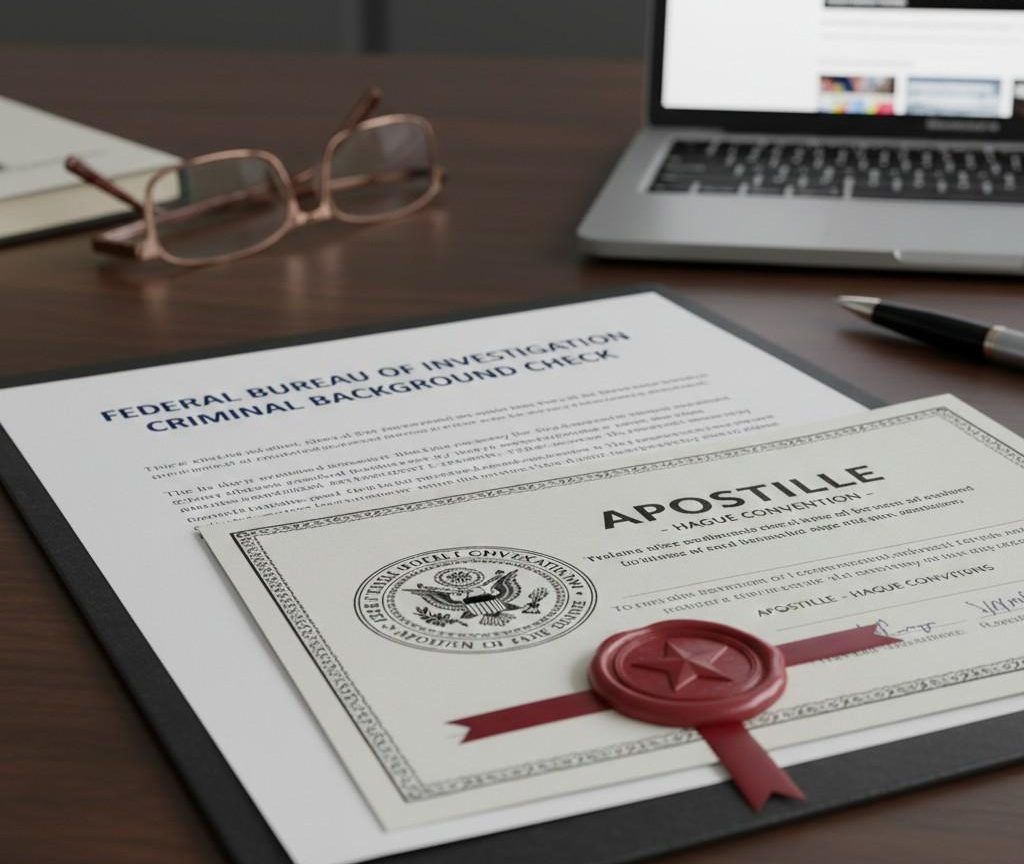
An apostille is an international certificate issued under the Hague Convention of 1961, which confirms the authenticity of a U.S. federal document for use in another Hague-member country.

⚠️ Important:
Only the U.S. Department of State can apostille FBI background checks. State Secretaries of State cannot authenticate federal documents.


FBI background check apostille

When Is an FBI Background Check Apostille Required?

An apostilled FBI background check is commonly required for:

International Employment

Foreign employers—especially in education, healthcare, security, and corporate sectors—require verified criminal history records.

Immigration & Visas

Residency, work visas, and citizenship applications often mandate apostilled FBI background checks.

Marriage & Family Sponsorship

Many countries require background checks when marrying a foreign national or sponsoring family members.

Studying Abroad

Some universities and student visa programs request apostilled FBI reports.

International Adoption

Adoptive parents must submit apostilled FBI background checks to meet child safety standards.


Step-by-Step FBI Background Check Apostille Process

Step 1: Obtain Your FBI Background Check

You must submit fingerprints to the FBI:

  • Electronic fingerprints (channelers): 1–3 business days
  • Paper fingerprint cards: 12–20 weeks (varies)

Step 2: Request the Correct FBI Document

You must request a physical FBI Identity History Summary with original FBI seal and signature.
Digital-only reports cannot be apostilled.

Step 3: Verify Apostille Eligibility

Your document must be:

  • Original (not a copy)
  • Issued directly by the FBI
  • Unaltered and untampered

Step 4: Submit to the U.S. Department of State

Required items include:

Step 5: Processing Options

  • Standard processing: ~3–5 weeks (estimated)
  • Expedited processing: ~5–10 business days (subject to availability)

Step 6: Receive Apostilled Document

The apostille certificate is attached directly to your FBI background check and returned to you for international use.


Apostille vs. Authentication: Know the Difference

Apostille

Used for Hague Convention countries (e.g., UK, France, Germany, South Korea).

Authentication + Embassy Legalization

Required for non-Hague countries (e.g., China, UAE, Saudi Arabia, Qatar).

🚫 A document is never both apostilled and legalized. The process depends entirely on the destination country.


Country-Specific Considerations

  • European Union: Apostille accepted; translation may be required
  • China: Authentication + Chinese embassy legalization required
  • Middle East: Often requires embassy legalization after State Department authentication
  • Latin America: Apostille generally sufficient
  • Japan: Apostille accepted, but formatting matters

Always confirm requirements with the requesting authority.


Common FBI Apostille Mistakes to Avoid

  • Ordering digital-only FBI reports
  • Submitting to a state office instead of the State Department
  • Missing document age limits (often 3–6 months)
  • Using apostille when embassy legalization is required
  • Waiting until deadlines are imminent

FBI background check apostille

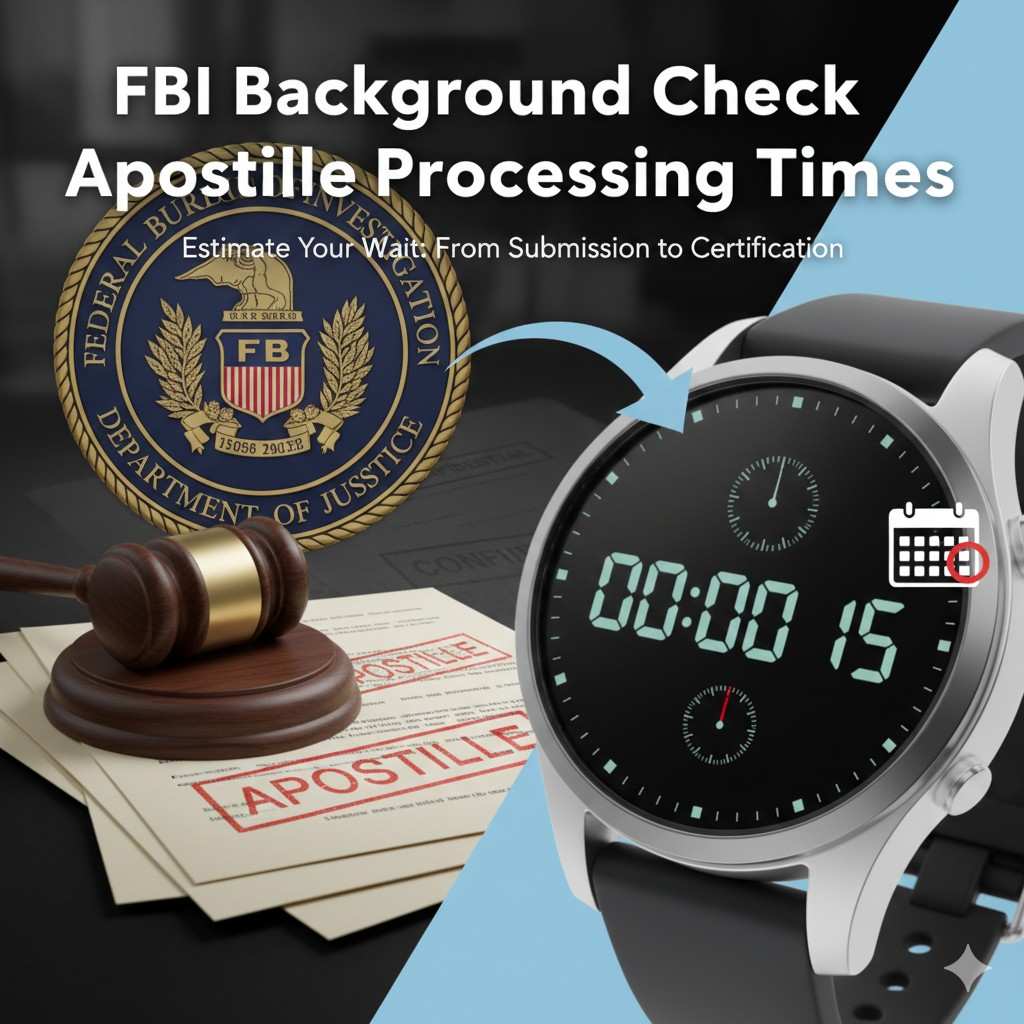
Processing Time Overview

StageEstimated Time
FBI electronic report1–3 business days
FBI paper submission12–20 weeks
State Dept. standard apostille3–5 weeks
Expedited apostille5–10 business days
Shipping (each way)2–5 days

FBI Background Check Apostille Costs (Approximate)

  • FBI report: $18 (direct) / $40–$75 (channelers)
  • Apostille fee: $20 per document
  • Expedited service: Additional fee (varies)
  • Shipping: $30–$60 (trackable courier)
  • Service provider fees vary based on complexity and urgency

⚠️ Fees may change—always confirm current pricing.


Who We Serve

  • Teachers & international educators
  • Healthcare professionals
  • Corporate executives
  • Immigration applicants
  • Military contractors
  • Families pursuing international adoption

Why Choose Apostille Authentications?

  • Deep expertise in federal document apostille
  • Accurate submissions that prevent rejections
  • Expedited options for urgent cases
  • End-to-end tracking and support
  • Authentication & embassy legalization services available

We don’t rely on shortcuts—we rely on experience, accuracy, and compliance.


Start Your FBI Background Check Apostille Today

Don’t risk delays or rejections due to paperwork errors. Apostille Authentications simplifies the FBI background check apostille process from start to finish.

Visit https://apostilleauthentications.com/ to begin your order or speak with our team about your destination country, deadlines, and requirements.

Your international plans deserve precision, speed, and peace of mind. Let us handle the complexities—so you can focus on what comes next.

FBI Criminal Background Check: 9 Steps for Perfect Results

FBI criminal background check

Navigating the FBI criminal background check process becomes significantly more complex when apostille authentication is required for international use. Whether you’re relocating abroad, applying for foreign employment, sponsoring a spouse, pursuing overseas education, or completing immigration paperwork, understanding both processes is essential.

At Apostille Authentication, we specialize in helping individuals nationwide obtain, authenticate, and apostille FBI criminal background checks correctly and on time. This fully updated and expanded guide breaks the process into nine critical steps—so nothing is missed.


FBI criminal background check

Step 1: Understand What an FBI Criminal Background Check Is

An FBI criminal background check—officially called an Identity History Summary—is a federal document issued by the Federal Bureau of Investigation that reflects criminal history information associated with your fingerprints.

This report may include:

  • Arrest records
  • Charges
  • Court dispositions
  • Convictions reported to the FBI by law enforcement agencies

If no history exists, the report will state “No Identity History Record.”

Unlike state background checks, the FBI check:

  • Covers all 50 states and federal jurisdictions
  • Is fingerprint-based (not name-based)
  • Is widely accepted for international purposes

Step 2: Know Why International Authorities Require FBI Checks

Most foreign governments and international institutions require federal-level background screening because:

  • State checks only reflect local data
  • FBI checks provide nationwide criminal coverage
  • The document carries federal authority and consistency

Common uses include:

  • Immigration and residency visas
  • Work permits and overseas employment
  • Marriage-based sponsorship
  • International adoption
  • Study abroad and teaching placements

FBI criminal background check

Step 3: Determine If an Apostille Is Required

If your destination country is a member of the Hague Apostille Convention, your FBI criminal background check must be apostilled to be legally recognized.

An apostille:

Countries outside the Hague Convention may require embassy or consular legalization instead.


Step 4: Obtain Proper FBI Fingerprinting

Fingerprinting is the foundation of the entire process.

You may submit:

  • Electronic fingerprints (recommended)
  • Ink fingerprint cards (FD-258)

Electronic fingerprinting:

  • Reduces rejection risk
  • Produces faster results
  • Minimizes quality issues

Poor-quality fingerprints are the number one cause of delays and rejections.


Step 5: Submit Your FBI Background Check Request Correctly

You may apply:

  1. Directly through the FBI (online portal or mail)
  2. Through an FBI-approved channeler

Key considerations:

  • FBI fee (direct): $18
  • Channelers charge additional service fees
  • Speed depends on submission method and fingerprint quality—not just the provider

Electronic submissions typically return results within 1–3 business days.


Step 6: Review Your FBI Criminal Background Check Carefully

When you receive your report:

  • Verify your name, date of birth, and identifiers
  • Check for missing dispositions
  • Confirm accuracy before apostille submission

⚠️ Important:
Expunged or sealed records may still appear if the FBI was not notified by the arresting agency. Corrections require a formal FBI challenge process.


Step 7: Ensure Your FBI Report Is Apostille-Eligible

The U.S. Department of State will only apostille FBI background checks that:

  • Are issued directly by the FBI
  • Are in unaltered PDF format
  • Contain the official FBI signature

Printed copies, screenshots, or modified files will be rejected.


Step 8: Complete the Apostille Process Through the U.S. Department of State

Only the U.S. Department of State (Washington, D.C.) can apostille FBI documents.

Typical requirements:

  • Original FBI PDF
  • Form DS-4194
  • Payment and mailing documentation

Processing times vary and may range from 2 to 8+ weeks, depending on volume and service level.

Most countries require FBI reports issued within 3–6 months, even though apostilles themselves do not expire.


Step 9: Confirm Country-Specific Requirements

Before submitting your documents abroad, verify:

  • Translation requirements
  • Document age limits
  • Additional legalization steps
  • Number of originals required

Many applications fail due to country-specific technicalities, not criminal history.


Why Use Apostille Authentication?

Apostille Authentication simplifies the entire process by acting as your compliance partner, not just a courier.

We provide:

  • End-to-end FBI apostille management
  • Department of State submission & tracking
  • Expedited processing options
  • Nationwide service
  • Error prevention and accuracy checks

Our Oregon-based team handles hundreds of FBI apostilles annually, ensuring your documents meet international standards the first time.


Additional Planning Tips

  • Order multiple apostilled copies if needed
  • Plan translation services in advance
  • Build buffer time into immigration timelines
  • Avoid last-minute submissions before visa interviews

Start Your FBI Criminal Background Check & Apostille Today

International deadlines don’t wait—and mistakes cost time and money.

Apostille Authentication ensures your FBI criminal background check is properly obtained, reviewed, and apostilled without stress or confusion.

👉 Visit https://apostilleauthentications.com/ to get started today.

Whether your documents are for employment abroad, immigration, marriage, adoption, or education, trust Apostille Authentication to deliver accurate, compliant, and on-time results.

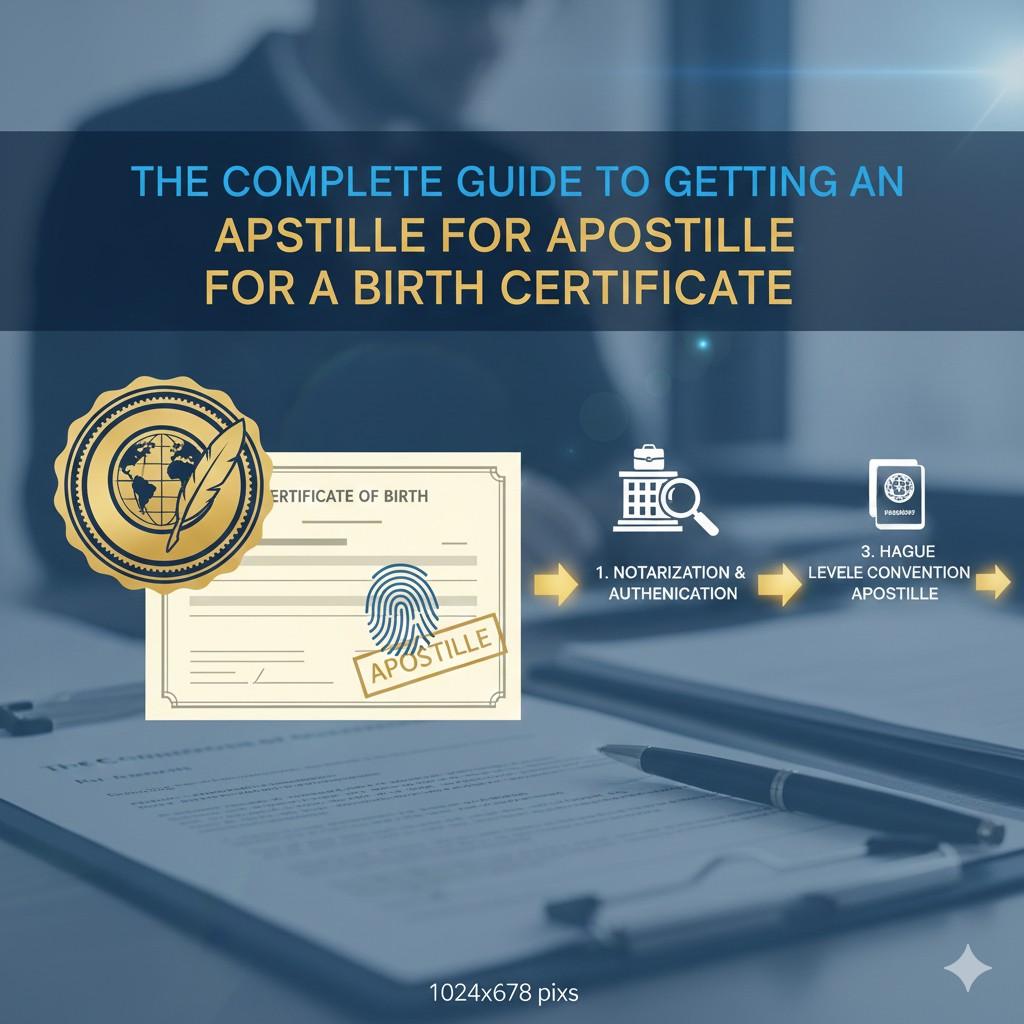
The Complete Guide to Getting an Apostille for a Birth Certificate

apostille for birth certificate

Apostille for birth certificate requirements are common when planning international travel, immigration-related processes, overseas employment, foreign education, or legal matters abroad. Understanding how the apostille for birth certificate process works can help you avoid delays, rejected documents, and unnecessary stress.

At Apostille Authentication, we help Oregon residents and clients nationwide obtain an apostille for birth certificate documents quickly and correctly. With years of experience handling apostille requests across all U.S. states, our team ensures your birth certificate is properly authenticated for international use.


What Is an Apostille for Birth Certificate?

An apostille for birth certificate is an official certification that verifies the authenticity of a certified U.S. birth certificate so it can be recognized by foreign authorities in countries that are members of the Hague Apostille Convention of 1961.

The apostille is issued by a designated state authority—usually the Secretary of State—and confirms that the signatures, seals, and stamps on your birth certificate are legitimate. Once issued, an apostille for birth certificate allows the document to be legally recognized for official purposes in more than 120 Hague Convention member countries.

Without an apostille for birth certificate documents, foreign governments or institutions may refuse to accept your birth certificate, which can delay important life events such as marriage, immigration, adoption, or employment abroad.


When Do You Need an Apostille for Birth Certificate?

An apostille for birth certificate may be required in many international situations, including:

International Marriage

Many countries require an apostille for birth certificate documents when registering a marriage abroad to confirm identity and eligibility.

Foreign Employment

Employers hiring foreign nationals often request an apostille for birth certificate as part of employment verification, especially in education, healthcare, and government-related fields.

Immigration-Related Processes

Some foreign immigration authorities or embassies require an apostille for birth certificate to verify identity or family relationships. (U.S. immigration agencies generally do not require apostilles.)

International Adoption

Adoption authorities frequently require an apostille for birth certificate documents to complete cross-border adoption cases.

Overseas Education

Universities abroad may request an apostille for birth certificate along with academic records.

Dual Citizenship Applications

Applicants claiming citizenship by descent typically need an apostille for birth certificate to prove lineage.

Legal or Property Matters Abroad

Foreign courts or property transactions may require an apostille for birth certificate to confirm identity.

Retirement or Residency Abroad

Some countries request an apostille for birth certificate when applying for long-term residency, healthcare, or pension benefits.


apostille for birth certificate

How the Apostille for Birth Certificate Process Works

Obtaining an apostille for birth certificate involves several essential steps:

Step 1: Obtain a Certified Birth Certificate

Only certified copies issued by the state vital records office can receive an apostille for birth certificate authentication. Photocopies are not accepted.

Step 2: Identify the Correct State Authority

An apostille for birth certificate must be issued by the state that originally issued the birth certificate. For Oregon-issued certificates, this is the Oregon Secretary of State.

Step 3: Submit for Apostille

The certified birth certificate is submitted to the appropriate state authority by mail, in person, or through a professional service.

Step 4: Verification and Apostille Issuance

The state verifies the document and attaches the apostille certificate to the birth certificate.

Step 5: Receive the Apostilled Document

Once completed, your apostille for birth certificate is ready for official use in Hague Convention countries.

Apostille Authentication does not issue apostilles; all apostilles are issued by designated government authorities.


How Long Does an Apostille for Birth Certificate Take?

Processing time for an apostille for birth certificate depends on several factors:

  • State processing speed: Oregon processing times often range around 5–7 business days, depending on workload.
  • Expedited options: Some states offer faster service for an additional fee.
  • Submission method: In-person submissions may be faster than mail.
  • Seasonal demand: Processing times may increase during peak travel periods.

Using a professional service can help reduce delays by ensuring your apostille for birth certificate request is submitted correctly the first time.


Common Challenges With Apostille for Birth Certificate Requests

  • Using outdated or damaged birth certificates
  • Submitting uncertified copies
  • Requesting an apostille from the wrong state
  • Needing consular legalization for non-Hague countries
  • Underestimating processing and shipping time

Proper preparation helps ensure your apostille for birth certificate is processed without issues.


Countries That Accept Apostille for Birth Certificate

An apostille for birth certificate is accepted in all Hague Convention member countries, including:

Spain, France, Italy, Germany, United Kingdom, Australia, Mexico, Japan, South Korea, Brazil, Argentina, and Mainland China (effective 2023).

If your destination country is not a Hague member, consular legalization is required instead of an apostille for birth certificate.


Apostille for Birth Certificate Costs

Costs typically include:

  • State apostille fees ($10–$50)
  • Certified birth certificate fees ($15–$40)
  • Professional service fees
  • Shipping costs

Apostille Authentication provides clear, upfront pricing so you know the full cost of your apostille for birth certificate in advance.


Why Choose Apostille Authentication?

  • Expertise in apostille for birth certificate processing nationwide
  • Careful document review to prevent rejection
  • Time-saving, end-to-end service
  • Secure handling of sensitive records
  • Support for Oregon and all 50 states

Get Started With Apostille for Birth Certificate Services Today

If you need an apostille for birth certificate, Apostille Authentication is here to help. Whether you’re preparing for international marriage, overseas employment, adoption, or residency abroad, our experienced team makes the process simple and reliable.

Visit apostilleauthentications.com today to begin your apostille for birth certificate request and move forward with confidence.

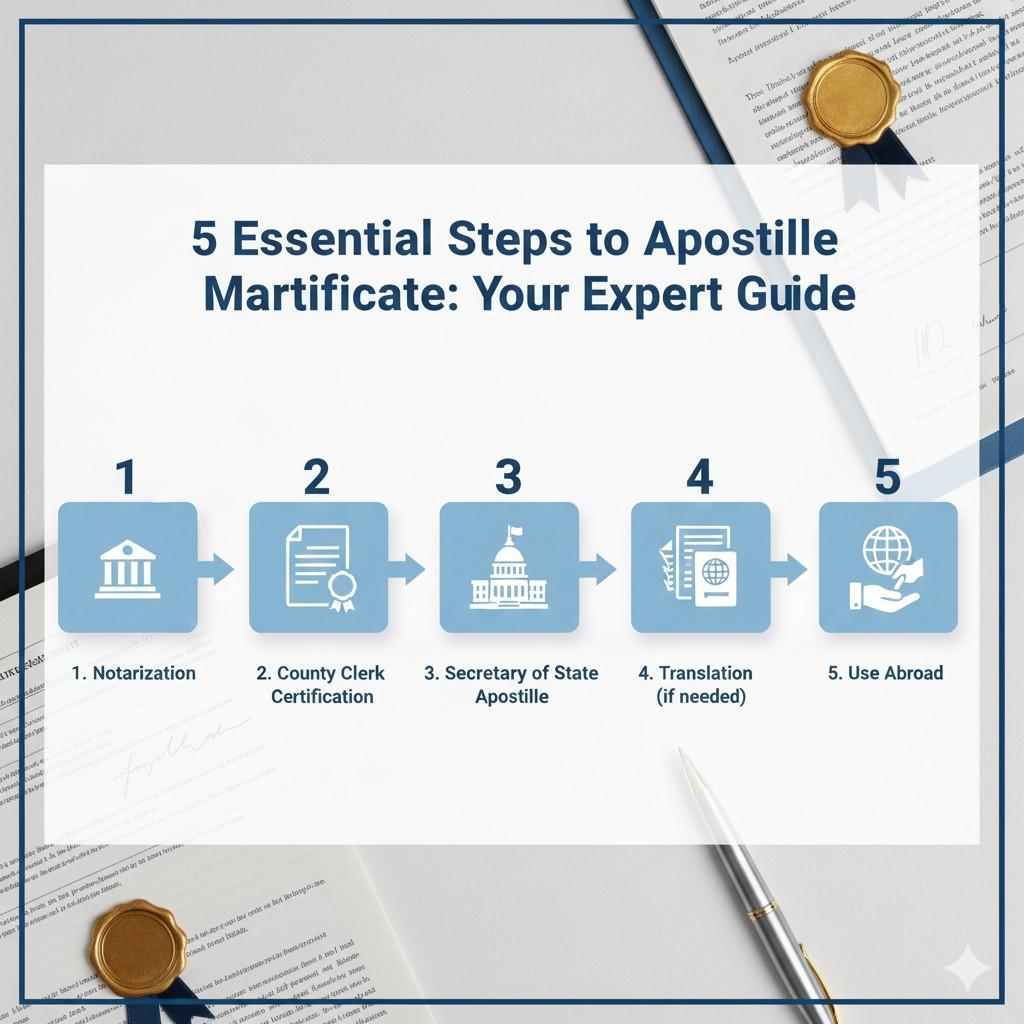
5 Steps to Apostille Marriage Certificate: Your Expert Guide

apostille marriage certificate

When life takes you across international borders—whether for work, love, immigration, or adoption—one document often becomes critically important: your marriage certificate. However, a standard U.S. marriage certificate isn’t automatically recognized in foreign countries. To make your marriage certificate valid abroad, you’ll need to apostille marriage certificate through an official authentication process. At Apostille Authentications in Oregon, we help individuals and families navigate this crucial process every day, ensuring their vital documents receive proper international recognition.

What Does It Mean to Apostille Marriage Certificate?

Before diving into the process, it’s important to understand what an apostille actually is. An apostille is a specialized certificate issued by a designated government authority that verifies the authenticity of a document for use in foreign countries. The term comes from the 1961 Hague Convention, an international treaty that standardized the process of document authentication between member countries.

When you apostille marriage certificate, you’re essentially getting an official stamp or certificate attached to your marriage document that confirms it’s genuine. This apostille allows your marriage certificate to be recognized as valid in over 120 countries that are part of the Hague Convention, eliminating the need for further authentication through embassies or consulates.

The apostille doesn’t certify the content of your marriage certificate or validate your marriage itself. Instead, it verifies that the official who signed your certificate had the authority to do so, making the document acceptable for international legal purposes.

Why You Might Need to Apostille Marriage Certificate

Understanding when you need to apostille marriage certificate can save you valuable time and prevent frustrating delays in your international plans. Here are the most common situations where an apostilled marriage certificate becomes necessary:

apostille marriage certificate

Immigration and Visa Applications: If you’re sponsoring your spouse for immigration to another country or applying for a spouse visa, foreign immigration authorities almost always require you to apostille marriage certificate as part of the application package.

International Employment: Many countries require proof of marital status for work permits, employment contracts, or dependent visas. Employers and government agencies in foreign countries will typically request that you apostille marriage certificate before processing your employment documentation.

Overseas Property Purchases: When buying real estate abroad as a married couple, foreign governments and property registries often require you to apostille marriage certificate to verify your marital status and establish property rights.

International Adoption: Couples adopting children from foreign countries must apostille marriage certificate as part of the adoption dossier required by both the foreign country and U.S. immigration authorities.

Dual Citizenship Applications: Many countries require apostilled marriage certificates when processing dual citizenship applications, particularly when citizenship is based on marriage to a foreign national.

Banking and Financial Matters: Opening joint bank accounts, transferring assets, or conducting significant financial transactions in foreign countries may require you to apostille marriage certificate for verification purposes.

Educational Institutions Abroad: Some international schools and universities request apostilled marriage certificates when enrolling dependent children or verifying family status for tuition purposes.

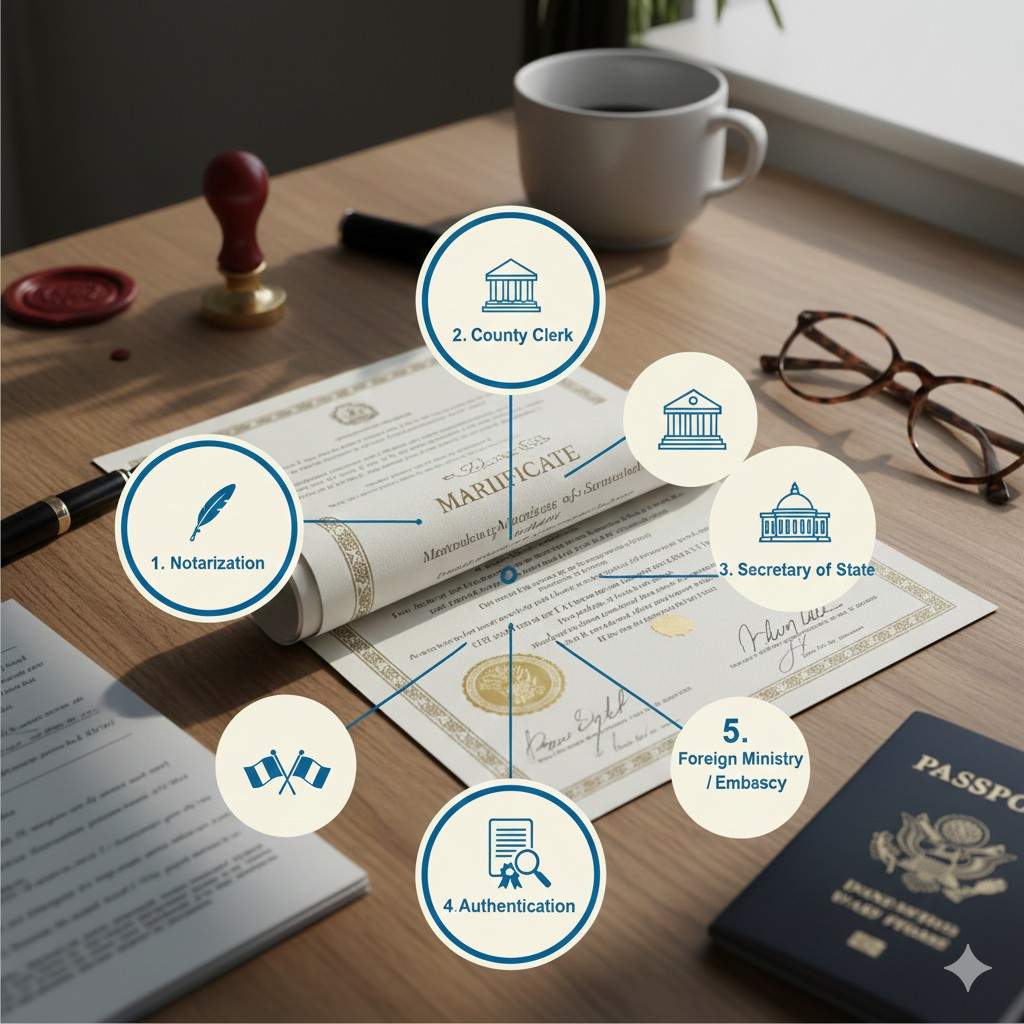
The Process to Apostille Marriage Certificate: What You Need to Know

At Apostille Authentications, we’ve streamlined the process to make it as efficient and stress-free as possible. Here’s what you need to know about how to apostille marriage certificate:

Step 1: Obtain a Certified Copy

The first step to apostille marriage certificate is ensuring you have the correct document. You cannot apostille marriage certificate using a photocopy or uncertified copy. You must have an original certified copy issued by the vital records office or county clerk where your marriage was registered.

Contact the county clerk’s office or state vital records department where your marriage license was filed and request a certified copy. Make sure to request multiple copies—you’ll typically need at least two or three for different purposes. Certified copies usually have an official seal, raised or embossed stamp, and the signature of the issuing authority.

Step 2: Verify the Issuing Authority

Before you can apostille marriage certificate, you need to determine which state authority issued it. This is important because apostilles must be obtained from the Secretary of State in the state where the document was issued, not where you currently live.

For example, if you were married in California but now live in Oregon, you must apostille marriage certificate through the California Secretary of State’s office. Each state has its own procedures, processing times, and fees for apostille services.

Step 3: Submit to the Appropriate Secretary of State

Once you have your certified marriage certificate, you’ll need to submit it to the correct Secretary of State’s office. This is where working with a professional service like Apostille Authentications can save you considerable time and hassle.

You can submit your documents by mail or in person, depending on the state’s requirements. Some states also offer expedited processing for an additional fee. The application typically requires a completed apostille request form, the original certified document, payment for the apostille fee, and a self-addressed return envelope if submitting by mail.

Step 4: Processing and Authentication

The Secretary of State’s office will review your marriage certificate to verify its authenticity. They’ll check that the signature and seal on the certificate match their records for authorized officials. Once verified, they’ll attach the apostille certificate to your marriage document.

Processing times vary significantly by state. Some states process apostille requests within 24 to 48 hours, while others may take two to three weeks or longer during busy periods. At Apostille Authentications, we maintain relationships with Secretary of State offices nationwide, allowing us to expedite the process and keep you informed every step of the way.

Step 5: Federal Documents and Special Cases

In some situations, you may need additional authentication beyond the state apostille. If your marriage certificate will be used in a country that’s not part of the Hague Convention, you’ll need to go through a different process called legalization, which involves authentication by the U.S. Department of State and the foreign country’s embassy or consulate.

Similarly, if you need to apostille marriage certificate issued by a U.S. military chaplain or federal authority, the process differs and requires authentication through the U.S. Department of State rather than a state Secretary of State.

Common Mistakes When Trying to Apostille Marriage Certificate

Over the years at Apostille Authentications, we’ve seen several common mistakes that can delay or derail the apostille process:

Using Uncertified Copies: Many people attempt to apostille marriage certificate using photocopies or decorative certificates received at their wedding. Only certified copies from the issuing authority can be apostilled.

Wrong State: Submitting documents to the Secretary of State in the wrong state is a frequent error. Remember, you must apostille marriage certificate through the state where it was issued, not where you currently reside.

Insufficient Copies: Many people only obtain one certified copy, but you often need multiple copies for different purposes. It’s much more efficient to get several certified copies at once before you apostille marriage certificate.

Missing Deadline Information: Different countries and organizations have varying requirements for how recent your apostilled documents must be. Some require documents apostilled within the past six months, while others accept older apostilles.

Incomplete Applications: Missing information on apostille request forms, incorrect payment amounts, or failure to include return envelopes can significantly delay processing.

How Apostille Authentications Simplifies the Process

At Apostille Authentications, we understand that when you need to apostille marriage certificate, you’re usually working under time constraints for important life events. Our Oregon-based team specializes in handling apostille services efficiently and accurately.

We offer comprehensive services that include document review to ensure you have the correct certified copies, guidance on which Secretary of State office to use, submission and tracking of your documents, expedited processing when needed, and secure return shipping of your apostilled documents.

Our experience with Secretary of State offices nationwide means we know the specific requirements, processing times, and procedures for each state. Whether you need to apostille marriage certificate from Oregon, California, Texas, Florida, or any other state, we have the expertise to handle it properly.

Planning Ahead: Timeline Considerations

If you know you’ll need to apostille marriage certificate for upcoming international plans, we strongly recommend starting the process at least four to six weeks in advance. This timeline accounts for obtaining certified copies from the vital records office (which can take one to three weeks), processing time at the Secretary of State’s office (which varies from a few days to several weeks), and shipping time if you’re using mail services.

For urgent situations, Apostille Authentications offers expedited services that can significantly reduce processing time. However, even with expedited processing, some states have minimum wait times that cannot be avoided.

Conclusion

The need to apostille marriage certificate is a common requirement for anyone engaging in international activities, from immigration and employment to adoption and property purchases. While the process may seem complex, understanding the steps involved and working with experienced professionals can make it straightforward and stress-free.

At Apostille Authentications in Oregon, we’re committed to providing expert apostille services that meet your timeline and budget. Whether you’re preparing for a move abroad, sponsoring a spouse’s visa, or pursuing international adoption, we’re here to ensure your marriage certificate receives the proper authentication it needs for international recognition.

Visit us at https://apostilleauthentications.com/ to learn more about our services or contact our team to begin the process to apostille marriage certificate today. Let us handle the paperwork while you focus on your exciting international journey ahead.