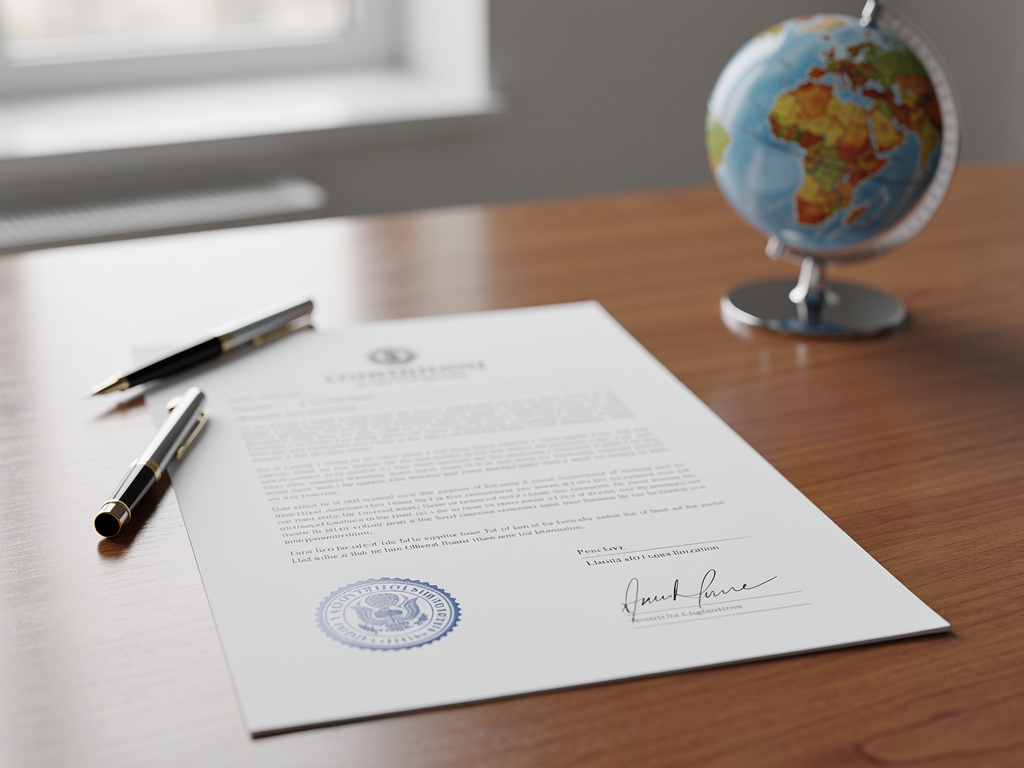
An apostille is a certificate that lets a U.S. public document be accepted in another country without further embassy steps. It is attached by the authority that oversees the official who signed your document, and it confirms that signature, seal and title are genuine. This guide explains which documents can be apostilled, who issues the certificate, and how to get it done without delays.
What an apostille does
The apostille comes from the 1961 Hague Apostille Convention. Countries that are party to the convention agreed to accept one standard certificate instead of the older chain of embassy legalization. As of October 2026 there are 130 contracting parties; see our list of apostille countries for the current members and recent additions.
An apostille does not check what your document says. It only confirms that the official who signed or certified it really holds that office. That is why the document itself must be the right version, usually a recent certified copy, before anything is submitted.
If the destination country is not a member, you need authentication and embassy legalization instead of an apostille.
Who issues apostilles in the United States
The issuing office depends on where the document comes from:
- State documents (birth, marriage and death certificates, court records, notarized papers, state business filings) are apostilled by the Secretary of State, or the equivalent office, in the state that issued them.
- Federal documents (FBI background checks, documents signed by federal officials or agencies) are apostilled by the U.S. Department of State Office of Authentications.
A Texas birth certificate cannot be apostilled in Oregon, and an FBI report cannot be apostilled by any state. Our guide to who issues apostilles in the US covers the rules in more detail.
Documents that commonly need an apostille
Personal and vital records
- Birth certificates for citizenship, residency or dual nationality applications
- Marriage certificates and certificates of no record of marriage
- Divorce decrees for remarriage or name changes abroad
- Death certificates for estates, pensions and insurance claims
Education records
- Diplomas, degrees and academic transcripts for study, teaching jobs or professional licensing abroad
Legal and business documents
- Powers of attorney, affidavits and other notarized statements
- Contracts, articles of incorporation, certificates of good standing and board resolutions
- Court orders, adoption papers and probate documents
Federal documents
- FBI background checks for work visas, residency and teaching programs
- Documents signed by federal officials, which go to the U.S. Department of State
How the process works, step by step
- Confirm what the receiving country needs. Ask the embassy, school, employer or court whether they want an apostille, how recent the document must be, and whether a translation is required.
- Get the right version of the document. Vital records usually need a certified copy from the state or county vital records office. Private documents, such as a power of attorney, must be signed in front of a notary.
- Check the signature and seal. The official who signed must be on file with the issuing office. Some states require county-level certification first.
- Submit to the correct office. State documents go to that state’s Secretary of State. Federal documents go to the U.S. Department of State with Form DS-4194 and a $20 fee per document.
- Translate if needed. Many countries ask for a certified translation. Our guide on whether to translate before or after the apostille explains the order.
How long it takes and what it costs
State offices set their own fees and timelines. Oregon, for example, charges $10 per apostille. The U.S. Department of State charges $20 per document and says mail-in requests take about five weeks from the day they arrive.
If you use Apostille Authentications, our service fee for a state apostille starts at $195 for the first document and $65 for each additional document, plus the government fee. FBI apostilles start at $195, or $390 expedited. Current prices are on our pricing page.
Mistakes that cause rejections
- Sending a photocopy or an old certified copy when the country wants a recent one
- Notarizations with missing dates, seals or venue details
- Sending a document to the wrong state or to a state instead of the federal office
- Forgetting that the destination country is not a Hague member
- Translating the document before it is apostilled when the country wants the apostille translated too
Our list of common apostille mistakes has more examples and fixes.
Frequently asked questions
Does an apostille expire?
The apostille itself does not expire, but many countries only accept documents issued within a recent window, often three to six months. Check with the receiving authority before you order copies.
Can I apostille a photocopy?
Not a plain photocopy. You need a certified copy from the issuing office, or a copy certified by a notary where state law allows it.
Can one apostille cover several documents?
No. Each document gets its own apostille certificate, and government fees are charged per document.
Do I need a translation as well?
Often yes. Many non-English-speaking countries require a certified translation of the document, and sometimes of the apostille. Our certified translation service can prepare it.
Get help with your documents
If you are not sure which office handles your document or what the receiving country expects, contact our team with the document type and destination country, and we will tell you the steps and costs before you send anything.
Related guides: Your Comprehensive Solution for Business Document Apostilles · Why is Apostille Attestation Needed?