
Taking a Loved One’s Ashes Abroad: Which U.S. Documents Need an Apostille?

Cremation urn beside a passport, a world map and white flowers at an airport window, with the title Taking a Loved One's Ashes Abroad

When someone dies in the United States, the family often wants to bring the ashes home: to a family tomb in Italy, a parish cemetery in Mexico, or a river in India. The flight is the easy part. The paperwork is what catches families off guard, usually a few days before they are due to travel.

Most countries will not accept a U.S. death certificate at face value. They want proof that the document is genuine, and for most destinations that proof is an apostille. This guide explains what that means, which documents are usually involved, and how to keep the process from holding up a funeral.

Why a foreign country asks for an apostille

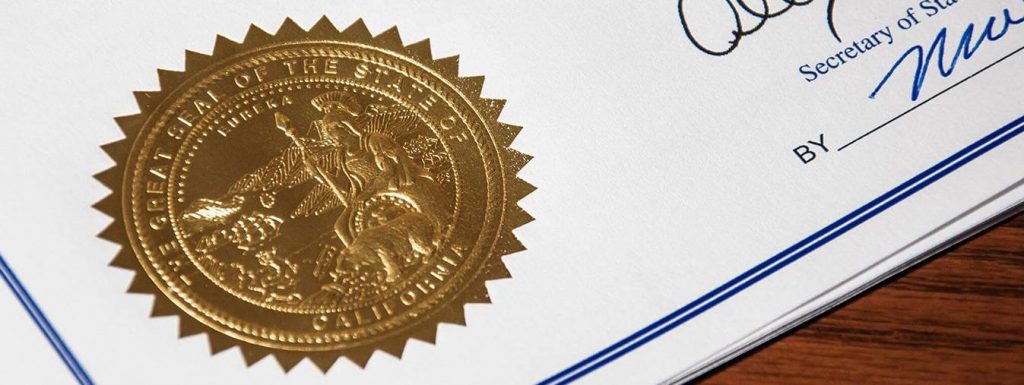
A clerk at a cemetery in Sicily or a civil registry in Jalisco has no way to tell whether a certificate from a U.S. county is real. An apostille solves that. It is a certificate attached by the Secretary of State that confirms the signature and seal on the document are authentic.

More than 120 countries accept apostilles under the Hague Apostille Convention. For those countries, one apostille is all the authentication a document needs. Countries outside the convention use a longer route called legalization, covered below.

The documents families are usually asked for

Every country sets its own list, but the same few documents come up again and again.

  • Certified death certificate. This is the one almost every country wants apostilled. Order several certified copies from the vital records office, because you will need them for banks and insurers too.
  • Cremation certificate. Issued by the crematory. Some countries, Italy among them, want this apostilled as well, which means it first has to be notarized.
  • Burial-transit or disposition permit. Issued by the local health department. It shows the remains may legally leave the area.
  • Funeral home statement. A notarized letter confirming the urn contains only the cremated remains of the person named.
  • Passport of the person who died. Consulates often ask for the ID of the person carrying the urn too.

Where the apostille comes from

This is the step that causes the most mistakes. An apostille is issued by the state that issued the document, not the state where you live.

If your father died in Florida and you live in New York, his death certificate goes to the Florida Secretary of State. A notarized document, such as the funeral home’s statement, goes to the Secretary of State where the notary is commissioned. Federal apostilles from the U.S. Department of State are for federal documents and are rarely needed for cremated remains.

If the country is not in the Hague Convention

For a non-member country, an apostille will not be accepted. The document goes through a chain instead: authentication by the state, then usually the U.S. Department of State, then legalization at that country’s embassy or consulate. Each step adds time, so start early.

Membership changes. Vietnam, for example, joined the convention in September 2026, so check the current status of your destination before you order anything.

The consulate usually has its own step

An apostille is often one part of a larger process. Many consulates issue their own travel document for the urn, such as Italy’s mortuary passport or Mexico’s consular visa on the documents. The consulate will not issue it until your apostilled paperwork is in order. Some consulates, such as those of the Philippines and India, work from the original certificates and do not ask for an apostille at all.

Make your first call to the consulate that covers the state where the death occurred. Ask for their written checklist for cremated remains.

Five ways to avoid delays

  1. Do not send a photocopy. Only a certified copy issued by vital records can be apostilled.
  2. Do not send the document to the wrong state.
  3. Do not forget the translation. Many countries want a certified translation of each apostilled document.
  4. Do not skip notarization on the cremation certificate when the destination wants it apostilled.
  5. Do not wait until the week of travel. Mail-in apostilles can take weeks in some states.

A short checklist

  • Ask the consulate for its cremated-remains checklist
  • Order at least three certified copies of the death certificate
  • Get the cremation certificate and funeral home statement, notarized if required
  • Have the required documents apostilled in the correct state
  • Arrange certified translations
  • Submit everything to the consulate and collect its permit
  • Confirm the airline’s rules for carrying or shipping an urn

How we can help

We obtain apostilles in all 50 states, so the paperwork does not delay the service your family has planned. Our service starts at $195. Standard processing takes about 10 business days, and same-day or next-day service is available for qualifying Oregon, Washington, Texas and Virginia documents. We ship completed documents internationally, and we quote the shipping cost once you provide the delivery address. Call Apostille Authentications at (971) 514-3743 or request a quote.

This article is general information, not legal advice. Requirements differ by country and by consulate and change without notice.

Country guides in this series: guides for Italy, Mexico, Vietnam, the Philippines and India will follow over the coming weeks.
Document Authentication for Colombia

Document authentication for Colombia banner showing a U.S. passport, apostille certificate and stamp beside the Colombian flag and Cartagena skyline

DOCUMENT AUTHENTICATION FOR COLOMBIA

Apostille Services for Colombia

Applying for a Colombian Migrant (M) or Resident (R) visa? Buying property, registering a marriage, or handling an estate there? Any U.S. document used in Colombia must carry an apostille first. We handle document authentication for Colombia from start to finish: we prepare, submit, and return your documents so Colombian authorities accept them the first time.

Send a message

Get in touch and let us know how we can help.

Flag Costa Rica
Colombia apostille

Why Colombia Requires an Apostille

Colombia is a member of the Hague Apostille Convention, so a U.S. public document is accepted there once it carries an apostille certificate from the issuing U.S. authority. Colombia’s Ministry of Foreign Affairs (Cancillería) states that foreign documents must be apostilled by the responsible authority in the country of issuance before they are valid in Colombia. Without the apostille attached, immigration officers, notaries (notarías), and civil registries can reject the paperwork. Whether a state office or a federal agency issued your document determines who has to apostille it first; we cover that distinction below.

Documents We Regularly Apostille for Colombia

Colombian immigration and civil authorities pay close attention to document dates and translation requirements. Here’s what we handle most often.

Commonly requested for Colombian visa applications. Confirm the accepted issue-date window with your specific application before ordering.

Needed for residency applications and civil registration. Requires a certified copy from the issuing state or county first.


Common for property purchases and legal representation while you remain outside Colombia.


For professional licensing or credential recognition with Colombian institutions.


Often requested for marriage registration or certain residency applications.


Articles of incorporation and financial records for investment-based visas or business registration.

State Documents

Birth certificates, marriage certificates, and other vital records are apostilled by the Secretary of State in the state where the document was issued. A certified copy from the state or county is required before we can submit it.

Federal Documents

FBI background checks and other federal paperwork are authenticated by the U.S. Department of State in Washington, D.C. not by a state office. We handle this submission for you directly.

Document Authentication

How the Process Works

Four steps from the document in your hand to a document that Colombia will accept.

Send Us Your Document

Email or upload a copy so we can confirm exactly what’s required for that document type and Colombia’s requirements.

We Prepare It

We confirm whether notarization or a certified copy is needed and get the document ready to submit.

We Submit for Apostille

Your document goes to the correct Secretary of State or U.S. Department of State office for authentication.

You Receive It, Ready to Use

We ship the completed apostille back to you, domestically or internationally, ready for submission in Colombia.

Pricing for Colombia Apostille Services

Pricing for document authentication for Colombia depends on the document type. Already have fingerprints or results in hand? FBI apostille alone is $195 (expedited: $390). Fingerprinting only (Live Scan) is $135; fingerprint card is $75. State and Federal vital-record apostilles (birth certificates, marriage certificates, power of attorney, diplomas) start at $195, with additional documents at $65 plus the government filing fee. Notary and certified Spanish translation are quoted separately based on document count. See full pricing details →
 

Ready to Start Your Colombia Apostille?

Send us your document, and we’ll tell you exactly what’s needed, what it costs, and how long it will take. You can also email your document or questions to Info@apostilleauthentications.com for personalized assistance.

Document Authentication, document legalization

Add Your Heading Text Here

Yes. Colombia is a member of the Hague Apostille Convention, so a U.S. public document must carry an apostille before Colombia’s Ministry of Foreign Affairs, immigration office, or civil registry will accept it.

Validity windows vary by visa type and are set by the Colombian authority reviewing your application, so it is worth confirming with your specific application before you order.

Yes, in most cases. Colombia’s Ministry of Foreign Affairs requires documents that are not in Spanish to be translated by an official translator, and the translator’s signature must itself be apostilled or legalized. Ask us about translation options when you send your document.

Yes — vital records like birth, marriage, and death certificates must start as a certified copy from the state or county office that issued them. We can advise on how to request one if you don’t already have it.

Requirements depend on the visa category and can change. Send us the document list from your application and we will confirm which items need an apostille.