Oregon Birth Certificate Apostille: Same-Day Service and How It Works

apostille for birth certificate Oregon

Need an Oregon birth certificate apostilled for use abroad? Apostille Authentications handles the whole process for a $195 service fee, with same-day or next-day processing for qualifying Oregon documents.

  • Service fee: $195, including same-day or next-day processing for qualifying documents
  • Turnaround: same day or next day when you call before 10 AM, or about 10 business days for standard service
  • Walk in: Hillsboro, Lake Oswego, Portland and Vancouver, Washington
  • Not local? Mail-in and upload options are available from all 50 states

The rest of this page explains how an Oregon birth certificate apostille works, what it costs, how long it takes, and the mistakes that get documents rejected.

What is an apostille?

An apostille is a certificate issued by a government authority that confirms the signature and seal on a public document are genuine. It does not translate the document or vouch for its contents. Countries that belong to the Hague Apostille Convention of 1961 accept it as proof of authenticity, so an Oregon birth certificate with an apostille can be used in places such as Germany, Mexico, Italy and South Korea.

Without one, foreign authorities will often refuse the document, which can stall a visa, a citizenship file or a school enrollment.

Who needs an Oregon birth certificate apostilled?

You will usually be asked for an apostilled birth certificate if you are:

  • Applying for dual citizenship or foreign nationality through ancestry
  • Getting married abroad
  • Moving abroad for work, especially in teaching, healthcare or government roles
  • Enrolling in a foreign university
  • Adopting internationally
  • Applying for a long-term visa or residency permit

How to get an Oregon birth certificate apostille

Two state offices are involved. The Oregon Center for Health Statistics, part of the Oregon Health Authority, issues certified copies of birth certificates. The Oregon Secretary of State then attaches the apostille to that certified copy. The copy you have kept at home usually cannot be used.
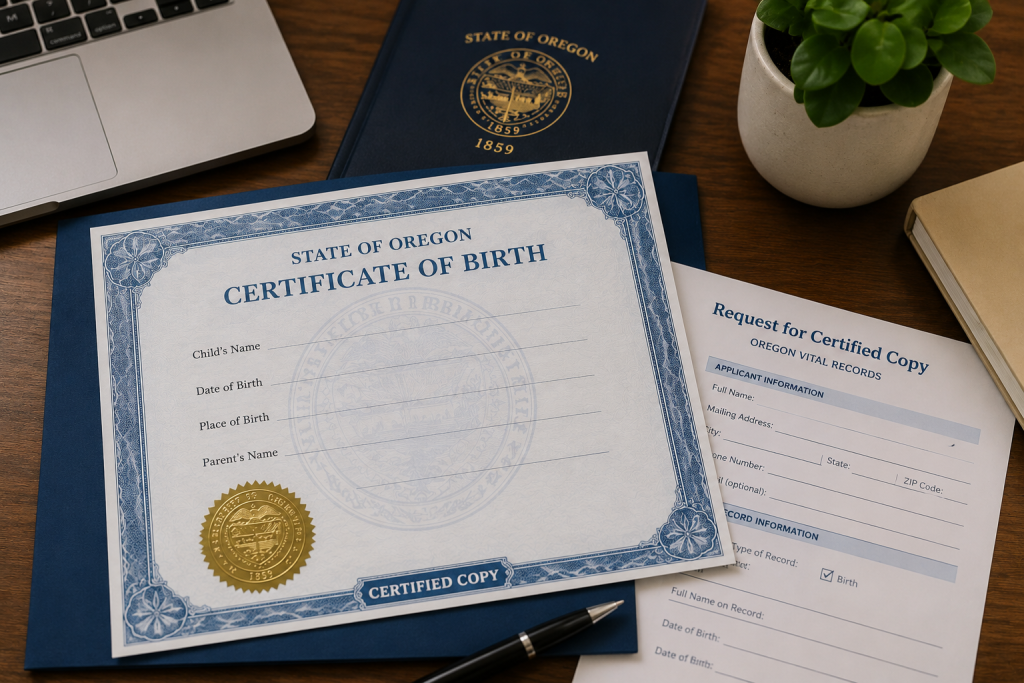
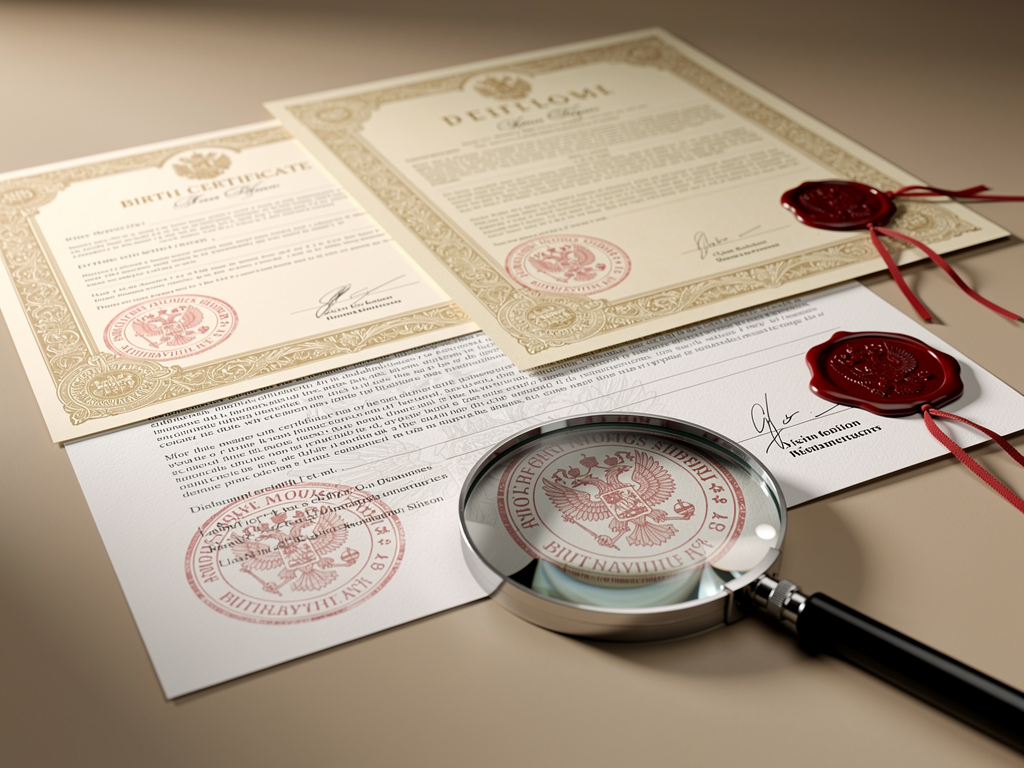
Oregon birth certificate prepared for an apostille

Step 1: Get a certified copy of the birth certificate

Order a certified copy from the Oregon Center for Health Statistics. A certified copy is a newly issued document with the registrar’s signature and an official seal, not a photocopy. You can order by mail, in person at the Oregon Vital Records office in Portland, or through the state’s third-party online ordering system.

You will need proof of identity. Oregon releases birth certificates only to the person named on the record, immediate family members, legal guardians and authorized representatives. Certified copy fees are set by the state, so check the Oregon Health Authority website for the current amount.

Step 2: Check the copy will be accepted

The certified copy must carry the original signature of a state registrar or authorized official and a clearly visible seal, and both must match what the Secretary of State has on file. Do not fold, laminate or alter the document. Damaged copies and copies missing a signature or seal are rejected, and you would have to order a new one.

Step 3: Submit it to the Oregon Secretary of State

Send or take the certified copy to the Secretary of State’s office in Salem with the completed Request for Apostille/Authentication form and the fee. The state charges $10 for each apostille. If you mail it, include a prepaid return envelope.

How long the state takes depends on whether you submit by mail or in person and on how busy the office is. Demand is usually higher in spring and summer.

Step 4: Or have us handle it

We can take care of the certified copy request, check the document, submit it to the Secretary of State and arrange return shipping. Same-day or next-day processing is available for qualifying Oregon documents when you call (971) 514-3743 before 10 AM. You can walk in at Hillsboro, Lake Oswego, Portland or Vancouver, Washington, or use our mail-in and upload options.

Step 5: Confirm what the destination country wants

Requirements differ by country. Some want a certified translation alongside the apostille, and some only accept an apostille or certified copy issued within a certain number of months. Check with the consulate, embassy or ministry that will receive the document before you start.

If you need a translation, we offer certified translations through our partner company Global Doc Translations, so the apostille and translation can be handled together. See our Oregon document translation services.

How much does an Oregon birth certificate apostille cost?

  • Oregon Secretary of State fee: $10 for each apostille
  • Our service fee: $195, the same for same-day or next-day processing of qualifying Oregon documents
  • Certified copy: a separate fee set by Oregon Vital Records
  • Return shipping: depends on the carrier and speed you choose, such as FedEx or international DHL
  • Certified translation, if needed: from $65 per document through our partner company

How long does it take?

With our service, qualifying Oregon documents can be completed the same day or the next day, depending on when we receive them. Standard service takes about 10 business days.

If you still need a certified copy, allow extra time. Ordering one by mail from Oregon Vital Records typically takes two to four weeks, while in-person requests can sometimes be completed the same day or within a few business days.

Common mistakes that cause rejections

  • Sending a personal copy. The apostille can only go on a certified copy issued by the state.
  • Using an old certified copy. Copies issued many years ago may carry a signature the Secretary of State can no longer verify.
  • Leaving out the fee or the request form. Either one delays the request.
  • Not checking the destination country first. A correct apostille can still be refused abroad if a translation is missing or the document is considered too old.
  • Leaving it too late. If your deadline is close, call us before you send anything.

What an Oregon apostille looks like

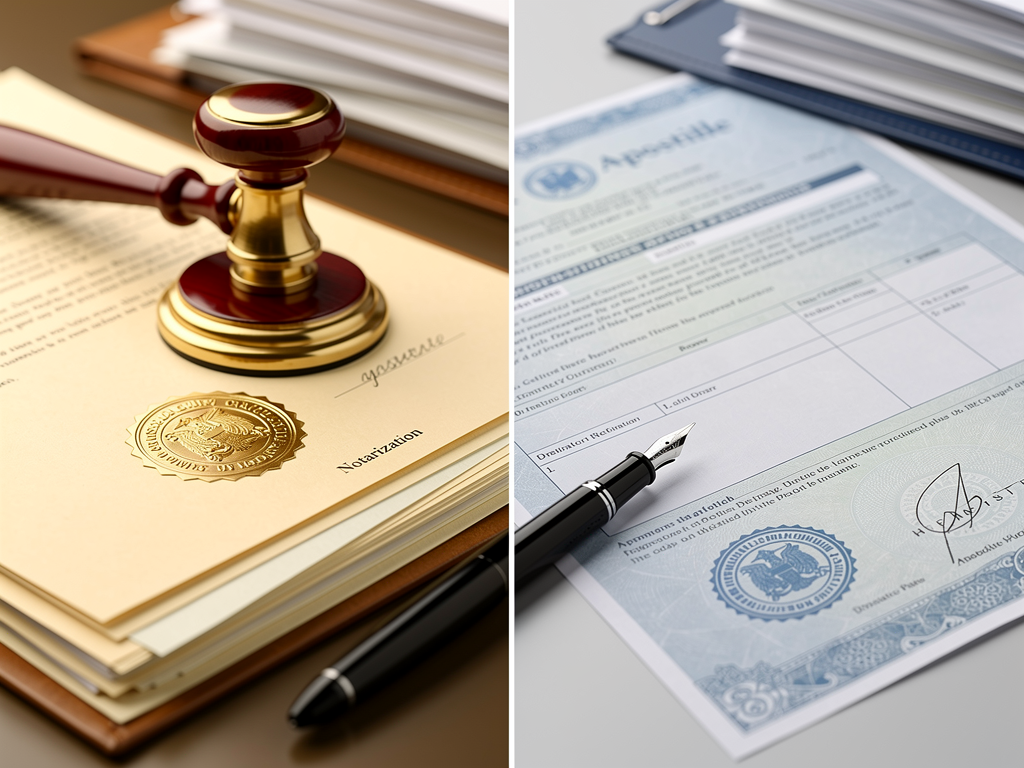
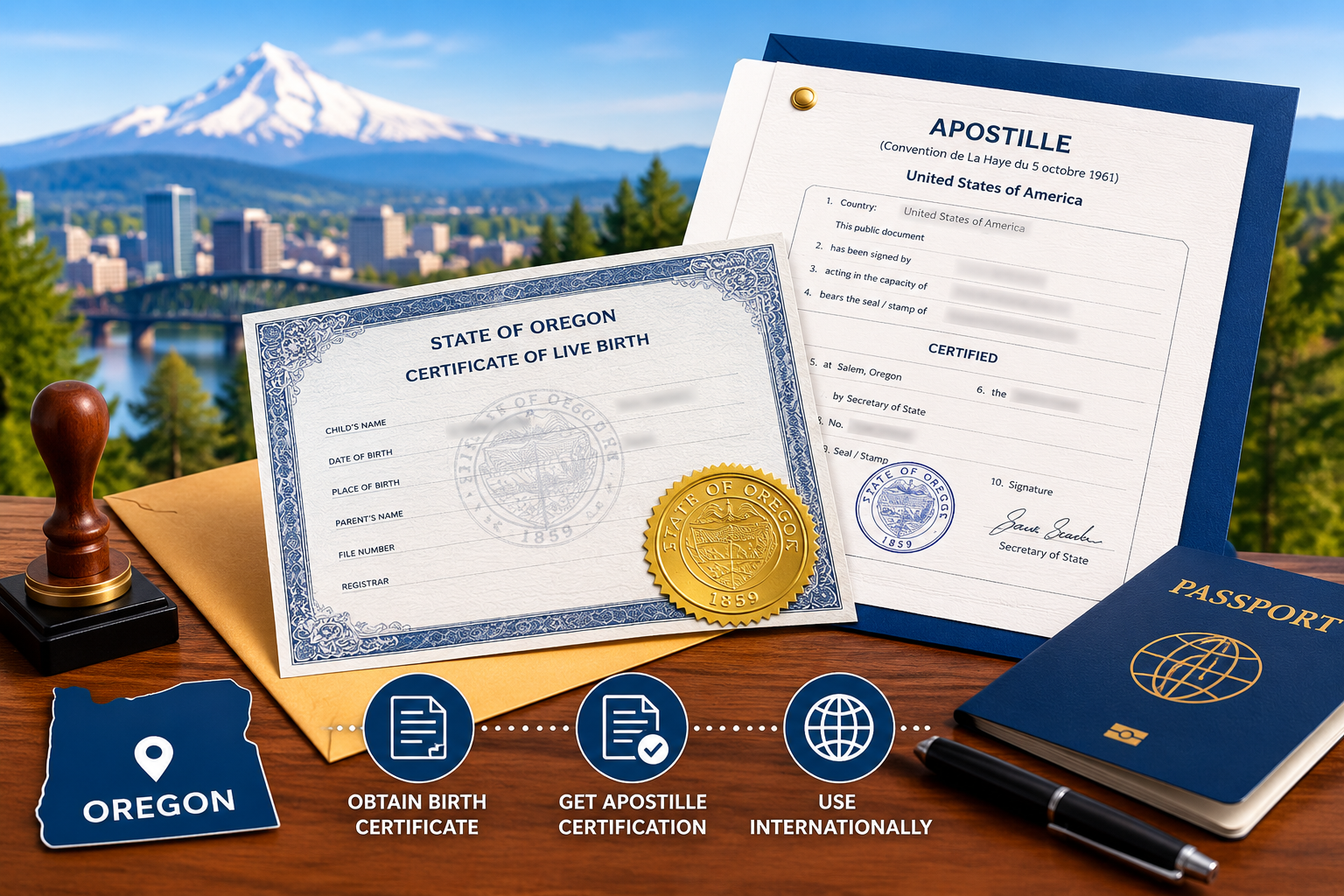
You get back two documents attached together: your certified Oregon birth certificate and the apostille certificate. The apostille follows the format set by the Hague Convention, with numbered fields for the country of issue, who signed the document and in what capacity, the seal on the document, the place and date of issue, the issuing authority, the apostille number, and the authority’s signature and seal.

Frequently asked questions

Can I walk in to get an Oregon birth certificate apostille?

Yes. You can walk in to our Hillsboro, Lake Oswego, Portland or Vancouver, Washington offices and hand us your certified birth certificate. Call (971) 514-3743 before 10 AM to confirm same-day availability. The Oregon Secretary of State’s office in Salem also accepts in-person submissions during regular business hours.

Where can I find the Oregon apostille request form?

The form is called “Request for Apostille/Authentication” and it is published on the Oregon Secretary of State website. If you use our service you do not need to fill it in yourself. We complete and submit it for you.

How can I tell if a birth certificate is already apostilled?

An apostille is a separate certificate attached to your birth certificate. It is titled “Apostille” with a reference to the Hague Convention of 5 October 1961, has ten numbered fields, and carries the signature and seal of the Oregon Secretary of State. The registrar’s seal printed or embossed on the birth certificate itself is not an apostille.

How much does an Oregon birth certificate apostille cost?

The Oregon Secretary of State charges $10 for each apostille. Our service fee is $195, and same-day or next-day processing for qualifying Oregon documents is the same $195 fee. Certified copy fees from Oregon Vital Records and return shipping are separate.

Can I apostille an Oregon birth certificate from out of state?

Yes. If you were born in Oregon but live elsewhere, you can mail your certified copy to us from anywhere in the United States. We return completed documents by FedEx or USPS.

Does an apostille expire?

The apostille itself has no legal expiration date. Some countries do require that the certified copy underneath it was issued within a set period, so confirm the rule with your destination country.

What if my birth was not registered in Oregon?

Oregon can only apostille Oregon records. If you were born in another state, the apostille has to come from that state. We process documents for all 50 states, so we can still help.

Can I apostille a foreign birth certificate through Oregon?

No. The Oregon Secretary of State can only apostille documents issued by Oregon authorities. A foreign birth certificate has to be authenticated in the country that issued it.

Why use Apostille Authentications

Apostille Authentications handles Oregon birth certificate apostilles from start to finish: certified copy coordination, document review, submission to the Oregon Secretary of State, certified translation when required and secure return shipping. Walk in at Hillsboro, Lake Oswego, Portland or Vancouver, Washington, or mail your documents from anywhere in the country.

Call or message us on WhatsApp at (971) 514-3743, seven days a week, for a quote and same-day availability.

Related guides: Birth certificate authentication · Apostille marriage certificate guide · Apostille countries in 2026
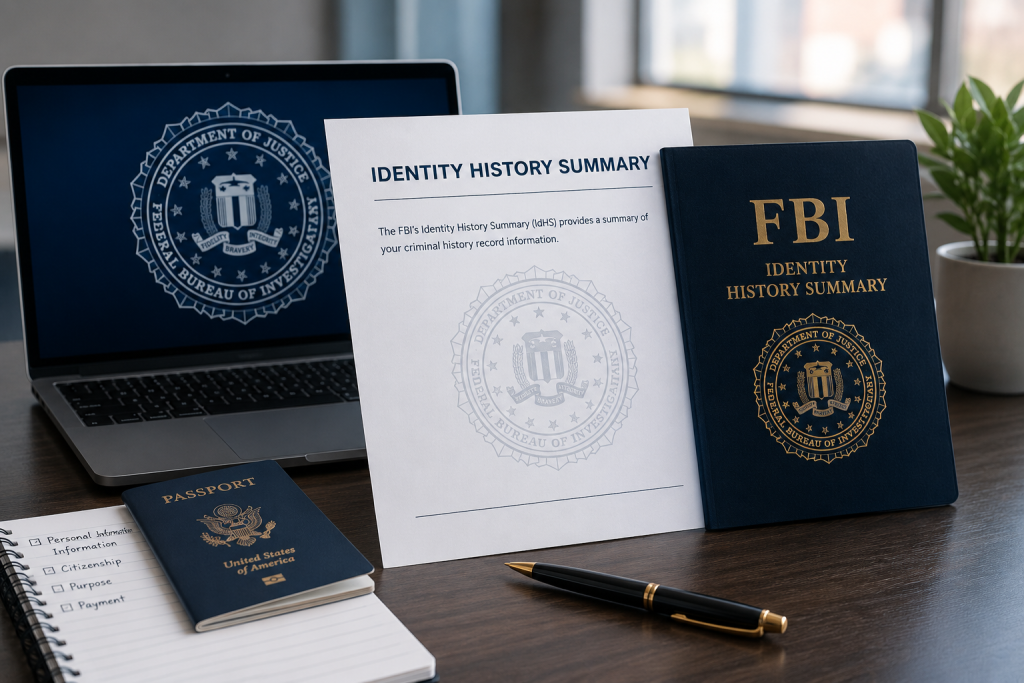
FBI Apostille Background Check: 2026 Expert Guide

FBI background check apostille

Getting an FBI background check apostille is one of the most important steps for anyone planning to live, work, study, or retire abroad.

Whether you are applying for a work visa, seeking permanent residency, or enrolling in a foreign university, most countries require a certified FBI criminal history report before they approve your application.

This complete 2026 guide walks you through every step of the process, from requesting your FBI report to getting your FBI background check apostille attached and accepted internationally.


What Is an FBI Background Check Apostille?

An apostille is an internationally recognized certification that authenticates the origin of a public document.

When a foreign government asks for your criminal history, they do not simply accept a printed FBI report. They require proof that the document is genuine and that the signature or seal on it belongs to an authorized U.S. government official.

An FBI background check apostille is the certification placed on your FBI Identity History Summary that verifies its authenticity for use in countries that are members of the Hague Apostille Convention.

Once your document carries this certification, it is legally recognized in more than 120 countries without needing any further authentication.


Who Needs an FBI Background Check Apostille?

You likely need an FBI background check apostille if you are:

Applying for a work visa or employment permit in a foreign country.

Seeking permanent residency or citizenship in another nation.

Enrolling in a foreign university or academic institution.

Getting married abroad and your new country requires a criminal clearance certificate.

Retiring overseas under a residency or pensioner visa program.

Adopting a child internationally, where background checks are a standard legal requirement.

Starting a business in another country that conducts due diligence on foreign nationals.

Nearly every country that participates in the Hague Convention will ask for this document at some stage of your immigration or legal process.


Understanding the Hague Apostille Convention

The Hague Apostille Convention was established in 1961. It created a simplified system for authenticating public documents so they could be used across international borders.

Before the convention, getting a document accepted abroad was a lengthy process involving multiple government agencies, embassies, and consulates.

Today, an apostille from a recognized authority in one member country is enough for the document to be accepted in all other member countries.

The U.S. Department of State is the designated competent authority for issuing apostilles on federal documents, which includes the FBI Identity History Summary.

Your FBI background check apostille goes through the U.S. Department of State before it can be used internationally.


FBI background check apostille

Step One: Obtain Your FBI Identity History Summary

Before you can get an FBI background check apostille, you need the actual FBI report.

The FBI Identity History Summary, also called a criminal history summary or rap sheet, is a record of all fingerprint submissions related to your identity that exist in the FBI database.

There are two ways to request your FBI report.

Option A: Submit Directly to the FBI

You can submit your fingerprints directly to the FBI using their official electronic or ink fingerprint process.

For electronic submissions, you use an FBI approved channeler. These are private companies that the FBI has authorized to collect fingerprints and transmit them electronically.

For ink submissions, you roll your fingerprints on a standard fingerprint card, known as an FD 258 card, and mail it to the FBI along with your payment and a signed Identity History Summary Request form.

Processing times for direct FBI submissions typically range from 3 to 8 weeks, though this can vary depending on current demand and workload.

Option B: Use an FBI Approved Channeler

An approved channeler processes your fingerprints electronically and returns your results much faster, often within 2 to 3 business days.

This is the most popular option for people who are working against immigration or visa deadlines.

A list of FBI approved channelers is available on the official FBI website.


Step Two: Prepare Your Document for Apostille

Once you have your FBI Identity History Summary in hand, the next step is submitting it for apostille authentication.

There are a few things to check before sending your document.

First, make sure your report is an original. The U.S. Department of State does not accept photocopies for apostille purposes.

Second, verify that the document includes a proper certification signature. FBI reports submitted through approved channelers typically come with a certification letter that includes a notarized signature, which is required for the apostille to be attached.

If your document does not have a qualifying signature, it will need to be notarized or certified before it can go to the Department of State.

Third, check the requirements of the destination country. Some countries require your FBI background check apostille to be translated into the local language after authentication. Others may require additional legalization beyond the apostille itself if they are not Hague Convention members.


Step Three: Submit to the U.S. Department of State

The U.S. Department of State Office of Authentications is the federal authority that issues apostilles on federal documents.

To obtain your FBI background check apostille, you submit your certified FBI report to the Office of Authentications along with the required fee and a cover letter that includes your return mailing address and the destination country.

Processing Options

The Office of Authentications currently offers two processing tiers.

Routine processing takes approximately 6 to 8 weeks.

Expedited processing takes approximately 1 to 2 weeks and comes with a higher fee.

You can submit your documents by mail or by in person drop off at their Washington D.C. office if you are located near the area.

What the Apostille Looks Like

The apostille itself is a standardized certificate, typically a stamp or attached page, that includes the name of the signatory, their official capacity, the seal of the issuing authority, the place and date of issue, and a unique identifying number.

This certificate is what foreign governments use to confirm that your document is legitimate.


How Long Does the Entire Process Take?

The total time to complete an FBI background check apostille from start to finish depends on which route you choose.

If you use an FBI approved channeler and pay for expedited processing at the Department of State, you can complete the entire process in as little as 2 to 4 weeks.

If you submit directly to the FBI and use routine processing at the Department of State, the process can take anywhere from 10 to 16 weeks.

Planning ahead is critical. Immigration agencies, foreign employers, and universities typically have hard deadlines, and missing them due to delays in the apostille process can set back your plans significantly.

It is always recommended to start your FBI background check apostille process at least three to four months before your application deadline if possible.


How Much Does It Cost?

Costs for an FBI background check apostille vary depending on the service providers you use.

FBI Identity History Summary

Direct FBI submission costs $18 per request.

Approved channeler fees vary but typically range from $50 to $75 in addition to any fingerprinting fees charged locally.

Fingerprinting

Live Scan fingerprinting fees vary by location and service provider, generally ranging from $20 to $60.

Ink fingerprint card services are often available at law enforcement offices, UPS stores, and private fingerprinting companies for a similar cost.

U.S. Department of State Apostille

Routine processing costs $20 per apostille as of 2026.

Expedited processing carries an additional fee on top of the base rate.

Professional Apostille Service

If you use a professional apostille service like ApostilleAuthentications.com, the entire process is handled on your behalf.

Professional services manage the submission, track your documents, and return the completed FBI background check apostille to you without requiring you to navigate the process alone.


Countries That Commonly Require an FBI Apostille

Many countries request an FBI criminal history report with apostille as part of their immigration or residency process.

Some of the most common destination countries include:

Italy requires a clean criminal record certificate apostille for the elective residency visa and citizenship applications.

Spain requests criminal background clearance with apostille for long term visas and residency permits.

Portugal has made this a standard requirement for its popular D7 passive income visa and the Golden Visa program.

Mexico requires apostilled background checks for temporary and permanent residency applications.

Colombia requests apostilled criminal records for certain visa categories.

South Korea asks for apostilled FBI reports for employment visas in specific industries.

United Arab Emirates requests criminal background clearance as part of the work permit process for many nationalities.

Australia may require an FBI report apostille depending on your visa class and length of stay.

Knowing the specific requirements of your destination country before you begin the process helps you avoid delays and rejections.


Non Hague Convention Countries

Not all countries are members of the Hague Apostille Convention.

If your destination country is not a member, an apostille alone is not sufficient. You will need to go through a process called legalization or authentication, which typically involves:

Getting your document certified by the U.S. Department of State.

Then having it authenticated by the embassy or consulate of the destination country in the United States.

An apostille service provider can advise you on whether your destination country requires legalization instead of or in addition to an apostille.

Always verify the requirements directly with the foreign government or their embassy before submitting your documents.


Common Mistakes to Avoid

Many applicants run into delays or rejections because of avoidable errors in the FBI background check apostille process.

Submitting Photocopies

The Department of State and most foreign governments require original certified documents. Never submit a photocopy.

Using an Expired Report

Many countries set a validity window on background check documents, typically six months from the date of issue. Always check the expiration policy of your destination country before you begin.

Wrong Country Listed on the Cover Letter

The apostille is issued for use in a specific country. If your cover letter lists the wrong destination, your document may be rejected by the receiving government.

Forgetting the Translation Requirement

Some countries require your apostilled document to be translated into their official language by a certified translator. Skipping this step can cause your application to be rejected even after your apostille is in order.

Not Using a Certified Fingerprint Provider

The FBI only accepts fingerprints that meet specific quality standards. Using an uncertified fingerprint provider can result in rejected submissions and delays.


Why Use a Professional Apostille Service?

Navigating the FBI background check apostille process on your own is entirely possible, but it comes with risks.

Government processing times fluctuate. Requirements change. Submission errors lead to rejection without refund of your time or fees.

A professional apostille service removes these risks.

At ApostilleAuthentications.com, we handle the entire authentication process from document verification to Department of State submission and final delivery.

Our team stays current on all federal processing requirements, country specific rules, and translation needs so your documents are prepared correctly the first time.

We track your documents throughout the process and keep you informed every step of the way.

Whether you need a single apostille urgently or you are coordinating a full package of documents for an international move, we are equipped to help.


Frequently Asked Questions

How long is an FBI apostille valid?

The apostille itself does not expire, but many countries require that the underlying FBI report be issued within the past six months. Always check with the receiving country for their specific validity requirements.

Can I get an apostille on an FBI report I already have?

Possibly. It depends on how the report was issued and whether it carries the necessary certification. Reports issued through an approved channeler with a notarized letter are typically eligible. Contact a professional service to review your existing document before submitting.

Does every country accept an FBI apostille?

Countries that are members of the Hague Apostille Convention accept it. Countries that are not members require a different process called legalization. Always verify before you apply.

What if my FBI report shows a record?

An apostille certifies the authenticity of your document, not its content. If your report shows a criminal history, it will be apostilled and submitted as is. Immigration outcomes depend entirely on the policies of the destination country.

Can I apostille other documents at the same time?

Yes. If you need apostilles on birth certificates, marriage certificates, or other federal or state documents, many apostille services can handle multiple documents in a single order.


Final Thoughts

The FBI background check apostille process is one of the most critical steps in any international immigration, employment, or residency application.

Understanding the steps, planning your timeline carefully, and avoiding common errors will help you move through the process efficiently and without costly setbacks.

If you want the process handled by experts who manage these submissions every day, visit ApostilleAuthentications.com to get started.

We make sure your documents are prepared, submitted, and delivered correctly so you can focus on the next chapter of your journey abroad.

Related guides: Obtaining an Apostille from the FBI: A Comprehensive Guide to Costs and Requirements · Does an FBI background check need to be notarized for an apostille?

Apostille Countries List 2026: All 130 Hague Convention Members

Apostille countries

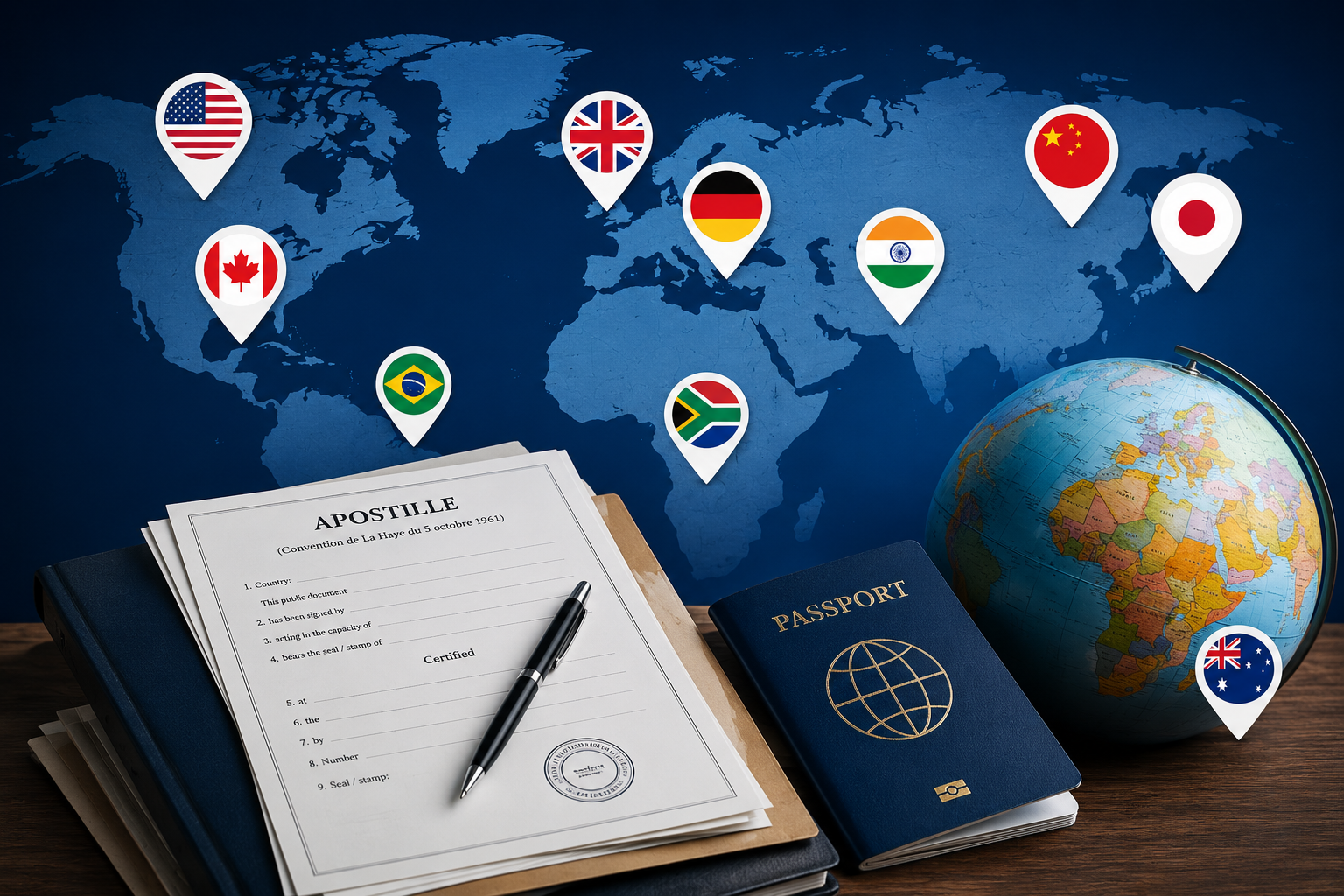
There are 130 apostille countries in 2026. These are the contracting parties to the Hague Apostille Convention, and a U.S. document with an apostille is accepted in each of them without embassy legalization. This page lists all 130 by region, the countries that are not members, and what to do in each case.

This list was checked against the official HCCH status table in October 2026.

  • Members: 130, including Thailand, where the Convention takes effect on February 28, 2027
  • Newest members: Vietnam (September 11, 2026) and Algeria (July 9, 2026)
  • Common non-members: United Arab Emirates, Egypt, Qatar, Kuwait, Jordan, Malaysia, Kenya and Nigeria

Not sure which route your document needs? Call (971) 514-3743 and we will tell you.

Apostille countries

What is an apostille?

An apostille is a certificate that confirms the signature, seal or stamp on a public document is genuine, so the document can be used in another country. It was created by the 1961 Hague Convention Abolishing the Requirement of Legalisation for Foreign Public Documents. It does not verify the content of the document.

Complete list of apostille countries in 2026

Europe (49)

Albania, Andorra, Armenia, Austria, Azerbaijan, Belarus, Belgium, Bosnia and Herzegovina, Bulgaria, Croatia, Cyprus, Czechia, Denmark, Estonia, Finland, France, Georgia, Germany, Greece, Hungary, Iceland, Ireland, Italy, Kosovo, Latvia, Liechtenstein, Lithuania, Luxembourg, Malta, Moldova, Monaco, Montenegro, Netherlands, North Macedonia, Norway, Poland, Portugal, Romania, Russia, San Marino, Serbia, Slovakia, Slovenia, Spain, Sweden, Switzerland, Türkiye, Ukraine and the United Kingdom.

The Americas (33)

Antigua and Barbuda, Argentina, Bahamas, Barbados, Belize, Bolivia, Brazil, Canada, Chile, Colombia, Costa Rica, Dominica, Dominican Republic, Ecuador, El Salvador, Grenada, Guatemala, Guyana, Honduras, Jamaica, Mexico, Nicaragua, Panama, Paraguay, Peru, Saint Kitts and Nevis, Saint Lucia, Saint Vincent and the Grenadines, Suriname, Trinidad and Tobago, United States, Uruguay and Venezuela.

Asia and the Pacific (27)

Australia, Bangladesh, Brunei Darussalam, China (including Hong Kong and Macau), Cook Islands, Fiji, India, Indonesia, Japan, Kazakhstan, Kyrgyzstan, Marshall Islands, Mongolia, New Zealand, Niue, Pakistan, Palau, Philippines, Samoa, Singapore, South Korea, Tajikistan, Thailand (from February 28, 2027), Tonga, Uzbekistan, Vanuatu and Vietnam.

Africa (17)

Algeria, Botswana, Burundi, Cabo Verde, Eswatini, Lesotho, Liberia, Malawi, Mauritius, Morocco, Namibia, Rwanda, Sao Tome and Principe, Senegal, Seychelles, South Africa and Tunisia.

Middle East (4)

Bahrain, Israel, Oman and Saudi Arabia.

A few members have objected to another country’s accession, which means the Convention does not apply between those two countries. If your document is going somewhere unusual, check the official HCCH status table or ask us before you start.

Countries that joined recently

  • Thailand: takes effect February 28, 2027
  • Vietnam: September 11, 2026
  • Algeria: July 9, 2026
  • Bangladesh: March 30, 2025
  • Rwanda: June 5, 2024
  • Canada: January 11, 2024
  • China: November 7, 2023
  • Senegal: March 23, 2023
  • Pakistan: March 9, 2023
  • Saudi Arabia: December 7, 2022
  • Indonesia: June 4, 2022

Non-Hague countries in 2026: where an apostille is not accepted

These frequently requested destinations are not parties to the Convention. This is not a complete list of non-members, so check any country you do not see on the member list above.

  • Middle East: United Arab Emirates, Qatar, Kuwait, Jordan, Lebanon, Iraq and Iran
  • Africa: Egypt, Kenya, Nigeria, Ghana, Ethiopia, Uganda, Tanzania, Libya and Zimbabwe
  • Asia: Malaysia, Cambodia, Myanmar, Nepal, Sri Lanka, Afghanistan, Turkmenistan and Taiwan
  • Americas: Cuba and Haiti

For these countries a standard apostille is not enough. The document goes through consular legalization instead: authentication at the state or federal level, then the U.S. Department of State where required, then the destination country’s embassy or consulate. It takes longer and costs more, and each embassy sets its own requirements. We handle embassy legalization as well as apostilles. See our pages on document legalization for Egypt and document legalization for the UAE.

Country guides for the most-requested destinations

Requirements change from one country to the next. These guides cover the documents we prepare most often for each destination and what that country’s authorities expect.

Which documents can be apostilled?

Apostilles are issued for public documents. Common examples are birth, marriage and death certificates, divorce decrees, diplomas and transcripts, notarized affidavits, powers of attorney, corporate documents, court records and background checks. A private document, such as a letter or a contract between individuals, usually has to be notarized first.

How to use this list

  • Destination is a member: you need an apostille. In the United States this usually comes from the Secretary of State of the state that issued the document. Federal documents, such as FBI background checks, go through the U.S. Department of State.
  • Destination is not a member: you need embassy legalization, which we also handle. Call us to confirm the steps.
  • Destination has joined but is not yet in force: this currently applies to Thailand. Use embassy legalization until the effective date.

Frequently asked questions

How many apostille countries are there in 2026?

The Hague Apostille Convention has 130 contracting parties according to the official HCCH status table. That count includes Thailand, where the Convention takes effect on February 28, 2027.

Is China an apostille country?

Yes. The Convention has been in force for China since November 7, 2023, and it also covers Hong Kong and Macau.

Is Canada an apostille country?

Yes. The Convention has been in force for Canada since January 11, 2024.

Is Saudi Arabia an apostille country?

Yes. The Convention has been in force for Saudi Arabia since December 7, 2022.

Is Indonesia an apostille country?

Yes. The Convention has been in force for Indonesia since June 4, 2022.

Is the UAE an apostille country?

No. The United Arab Emirates is not a party to the Convention, so documents for the UAE need embassy legalization instead of an apostille.

Is Thailand an apostille country?

Thailand has joined, but the Convention does not take effect there until February 28, 2027. Until then, documents for Thailand still need embassy legalization.

Need a document apostilled?

Apostille Authentications processes documents from all 50 states for use in any Convention country. Call or message us on WhatsApp at (971) 514-3743 and we will confirm which route your document needs and how long it will take.

Related guides: Complete Guide to Getting Documents Apostilled: International Authentication Made Simple · Understanding Apostilles: Your Complete Guide to Document Authentication for International Use

Apostille Authentication Service: 3 Key Differences You Must Know Today

apostille authentication service

If you have ever needed to use a document in a foreign country, you have probably heard terms like apostille, authentication, and notarization thrown around.

These three processes sound similar. They are not.

Mixing them up can delay your visa, stall your business deal, or even get your documents rejected at a foreign embassy.

This guide breaks down exactly what each process means, when you need it, and how a trusted apostille authentication service can make the entire experience far less stressful.


What Is Notarization?

Notarization is the most basic level of document verification available in the United States.

A notary public is a state-appointed official who verifies the identity of the person signing a document. The notary then stamps and signs the document to confirm that the signature is genuine.

This is where the process starts, but it does not go very far on its own.

Notarization confirms who signed a document. It does not verify the content of the document, and it carries no legal weight outside the country.

Common documents that require notarization include affidavits, powers of attorney, real estate deeds, and financial agreements.

If you are using a document only within the United States, notarization may be all you need.

But the moment that document needs to cross a border, notarization alone is rarely enough.


What Is Authentication?

Authentication is a multi-step process that goes beyond notarization.

After a document is notarized, it must be certified at several levels of government before it can be accepted in certain countries.

The typical authentication chain in the United States looks like this:

First, the document is notarized by a state-commissioned notary public. Then, the notary’s signature is certified by the county clerk or the state’s Secretary of State. After that, the U.S. Department of State authenticates the document at the federal level. Finally, the embassy or consulate of the destination country places its own seal on the document.

This final step, known as legalization or consular authentication, is what makes the document legally usable in that specific foreign country.

Authentication is required for countries that are not members of the Hague Apostille Convention of 1961.

If you are sending documents to countries in parts of Asia, the Middle East, or Africa, you will likely need full authentication rather than an apostille.

This is a longer, more complex process, which is exactly why many individuals and businesses turn to a professional apostille authentication service to handle it on their behalf.


What Is an Apostille?

An apostille is a specialized certificate issued by a government authority that verifies the authenticity of a public document for use in another country.

The apostille was introduced under the Hague Convention of October 5, 1961, and it applies only between the countries that are members of this convention.

As of October 2026, 130 countries and territories are members of the Hague Apostille Convention.

When a country is a member, the apostille acts as a streamlined form of authentication. It eliminates the need for the lengthy multi-step embassy legalization process.

Instead, one single apostille certificate is attached to your document, and it is recognized directly by the destination country.

The apostille itself includes the name of the country issuing it, the name of the person who signed the document, the title of the person who stamped or sealed the document, the name of the city where the document was issued, the date of issue, and a unique identifying number.

In the United States, apostilles are issued by the Secretary of State in each state, or by the U.S. Department of State for federal documents.

An apostille authentication service handles all the submission, tracking, and delivery so you receive a certified document without unnecessary delays.


The Core Differences at a Glance

Understanding the differences between these three processes is critical before submitting any international documents.

Notarization is a domestic verification of a signature. It is performed by a notary public. It carries legal weight only within the United States and has no international recognition on its own.

Authentication is a chain of certifications required for documents going to countries outside the Hague Apostille Convention. It involves multiple government agencies and embassies. It is the most time-consuming option.

Apostille is a single-certificate verification required for documents going to countries that are members of the Hague Apostille Convention. It is faster than full authentication and is accepted across 130 member countries and territories.

A reliable apostille authentication service will first determine which process your specific document requires before proceeding with any filings.


apostille authentication service

When Do You Need an Apostille?

You need an apostille when you are sending documents to a country that is part of the Hague Convention and that country requires official verification of your document.

Common situations where people seek an apostille authentication service include:

Studying abroad. Universities in countries like Spain, Italy, Germany, and Brazil require apostilled academic transcripts, diplomas, and background checks before accepting international students.

Getting married overseas. Many countries require apostilled birth certificates, proof of single status, and other civil documents before they will permit a foreign national to marry on their soil.

Starting a business internationally. Companies expanding into Hague Convention member countries need apostilled articles of incorporation, powers of attorney, and financial documents.

Adopting a child from another country. International adoptions require extensive apostilled documentation to satisfy both the home country and the destination country.

Working abroad. Employment visas often require apostilled background checks, degrees, and professional certifications.

Retiring overseas. Retirees applying for long-term residency visas in places like Portugal, Mexico, or Panama are frequently asked to provide apostilled pension letters, bank statements, and birth certificates.

In every one of these situations, an apostille authentication service reduces the burden by navigating the paperwork requirements on your behalf.


When Do You Need Full Authentication Instead?

If the country where you plan to use your document is not a member of the Hague Apostille Convention, you will need to go through the full authentication process instead.

Countries like Kuwait, the United Arab Emirates, Qatar, Egypt and several others have not joined the Hague Convention. China joined in November 2023 and Vietnam in September 2026, so both now accept apostilles.

For these destinations, your documents must pass through the complete chain: notary, state certification, federal certification, and then consular legalization at the embassy or consulate of the destination country.

This process can take weeks, sometimes longer, depending on the embassy’s workload and the type of document involved.

A professional apostille authentication service that also handles consular legalization can coordinate all of these steps simultaneously and keep the timeline as short as possible.

Knowing whether your destination country is in the Hague Convention is the very first step, and it determines everything else that follows.


What Types of Documents Can Be Apostilled?

Not every document qualifies for an apostille. Only public documents are eligible.

Public documents include birth certificates, death certificates, marriage certificates, divorce decrees, court judgments, educational diplomas and transcripts, notarized private documents, government-issued background checks, and corporate documents issued or notarized by government officials.

Private documents, like personal letters, resumes, or privately drafted contracts, must first be notarized by a notary public before they can be submitted for an apostille.

A knowledgeable apostille authentication service will advise you on whether your document qualifies as a public document, whether it needs notarization first, and which government office has authority to issue the apostille for your specific document type.


How Long Does the Process Take?

Processing times vary widely depending on the type of document, the issuing state, and whether you are requesting an apostille or full authentication.

State-level apostilles typically take anywhere from a few days to several weeks, depending on the Secretary of State’s current workload. Some states offer expedited processing for an additional fee.

Federal apostilles for documents issued by U.S. federal agencies are processed by the U.S. Department of State’s Office of Authentications, and standard processing currently takes five weeks or more by mail and two to three weeks for walk-in drop-off.

Full authentication for non-Hague countries takes longer still, often four to eight weeks, depending on the embassy involved.

When you use an apostille authentication service, expedited options are usually available. The service can submit in person and knows the rules of each office, which reduces turnaround time.


Common Mistakes to Avoid

There are several costly mistakes that people make when attempting to handle apostille or authentication on their own.

Submitting the wrong document type. Some countries require an original certified copy, not a photocopy. Others accept notarized copies. Submitting the wrong format will result in rejection and delays.

Missing the signature chain. Authentication requires every signature along the chain to be certified in the correct order. Skipping a step, even accidentally, invalidates the entire document.

Failing to check the destination country’s requirements. Requirements differ not just by country but sometimes by the specific purpose of the document. A marriage certificate submitted for a visa application may have different requirements than the same certificate submitted for a residency permit.

Using an expired document. Many countries specify that documents must have been issued within a certain timeframe. An apostille authentication service will flag outdated documents before submission.

Trusting unofficial intermediaries. Not all document service providers are accredited or reputable. Always work with a verified apostille authentication service that has transparent pricing, clear timelines, and verifiable customer reviews.


Why Use a Professional Apostille Authentication Service?

Handling apostille or authentication requests independently is possible, but it is rarely the most efficient path.

Government offices have specific requirements for how documents must be submitted, what fees are required, and how returns are processed. One small error at any point in the chain can result in rejection and force you to start over.

A professional apostille authentication service understands every detail of this process.

They know which documents require state-level processing versus federal processing. They know which states allow online submissions and which require in-person filing. They track your documents from submission to return. They alert you if any issues arise.

For individuals, using an apostille authentication service means less time spent researching confusing government procedures and more time focusing on the actual reason you need the document in the first place.

For businesses, an apostille authentication service becomes a reliable partner for handling the volume of international documentation that grows with your expansion.


Choosing the Right Apostille Authentication Service

Not all services are created equal. When choosing a provider, look for the following qualities.

Experience and specialization. A service that focuses exclusively on document authentication and apostille processing will have deeper expertise than a general legal document service.

Clear communication. You should receive regular updates on the status of your documents. An apostille authentication service that leaves you in the dark is not worth your time or money.

Knowledge of international requirements. Requirements change. Embassies update their procedures. Countries join or leave conventions. Your service provider should stay current on all of these changes so you do not have to.

Transparent pricing. There should be no hidden fees. Government filing fees, courier costs, and service charges should all be clearly disclosed upfront.

Positive track record. Look for verified reviews and testimonials from real customers who have used the apostille authentication service for situations similar to yours.

At ApostilleAuthentications.com, our apostille authentication service is built around transparency, speed, and accuracy. We handle every step of the process so your documents arrive correctly certified and on time.


Final Thoughts

Notarization, authentication, and apostille are three distinct processes designed for three distinct purposes.

Notarization verifies a signature for domestic use. Authentication certifies a document for use in non-Hague countries through a chain of government and embassy approvals. An apostille provides streamlined international certification for use in Hague Convention member countries.

Getting the right process the first time saves you time, money, and a great deal of frustration.

Whether you are a student, a professional, a business owner, or someone planning a major life event abroad, working with a trusted apostille authentication service is the smartest decision you can make when your documents need to cross borders.

Ready to get started? Visit ApostilleAuthentications.com and let our apostille authentication service take the complexity out of international document certification.

Document Apostille Timeline: How Long Does the Authentication Process Really Take?

blog feature 24

How long an apostille takes depends on two things: which office issues it, and how long it takes you to get the document ready. A state apostille can be done the same day or take a few weeks. A federal apostille from the U.S. Department of State, such as for an FBI background check, takes about five weeks by mail. This guide breaks down each stage so you can plan around your deadline.

The three stages of the timeline

  1. Getting the document ready: ordering certified copies, notarizing, or requesting an FBI report
  2. Apostille processing by the state or the U.S. Department of State
  3. Delivery and translation: return shipping and any certified translation

Most delays happen in stage 1 or because a document is rejected and has to be filed again.

Stage 1: Preparing the document

DocumentWhat to getTypical time
Birth, marriage, death certificatesCertified copy from state or county vital recordsA few days to several weeks, depending on the office
Divorce decree, court ordersCertified copy from the court clerkA few days to two weeks
Diplomas and transcriptsNotarized or certified copies from the registrarA few days to a few weeks
Powers of attorney, affidavitsSignature before a notarySame day
FBI background checkIdentity History Summary from the FBIAbout 48 hours with electronic fingerprints at a participating Post Office, or up to about 15 days plus mailing by mail

Stage 2: Apostille processing times

State apostilles

Each state sets its own timeline. Some examples from official sources:

  • Virginia: mailed requests take 7 to 10 business days; drop-box and courier submissions 5 to 7 business days; most appointments are processed the same day (source)
  • California: same-day service is available in person at its Sacramento and Los Angeles offices; mail requests are processed in the order received (source)
  • Washington: offers an expedite option for an extra $100 per 10 documents (source)

Our state apostille guides list the details for each state.

Federal apostilles

The U.S. Department of State Office of Authentications handles FBI checks and other federal documents. It says mail-in requests take about five weeks from the day they arrive, drop-off appointments about seven business days, and emergency appointments are same-day for urgent cases (source). See our FBI apostille processing time guide for a full breakdown.

Stage 3: Delivery and translation

Add return shipping time, and international shipping if the documents go straight abroad. If you need a certified translation, allow time for it after the apostille; see whether to translate before or after the apostille.

Typical total timelines

ScenarioRealistic total
Oregon document, filed in personSame day to a few days
State document filed by mailOne to several weeks, depending on the state
FBI background check, regular federal processingFive weeks or more
FBI background check, our expedited serviceAbout 10 business days
Non-Hague country with embassy legalizationSeveral weeks or more

How to speed things up

  • Order fresh certified copies early, before you need the apostille.
  • Use electronic fingerprints for FBI checks.
  • Double-check notarizations: missing seals and dates are a common cause of rejection.
  • Use same-day state service where available. Apostille Authentications offers same-day service for Oregon, Washington, Texas and Virginia documents at our standard $195 fee, depending on when we receive them.
  • For FBI checks, consider expedited service at $390. See our pricing page.

Our list of common apostille mistakes explains what causes most delays.

Frequently asked questions

What is the fastest way to get an apostille?

For state documents, an in-person or same-day service in the issuing state. For federal documents, an expedited service or a U.S. Department of State appointment.

Why does an FBI apostille take longer than a state apostille?

FBI reports are federal documents, so only the U.S. Department of State can apostille them, and its mail processing takes about five weeks.

Can I track my apostille?

Many state offices and services provide tracking for mailed documents. Ask your service for tracking numbers both ways.

What happens if my document is rejected?

The office returns it with a reason. You fix the issue, such as a missing notary seal, and file again, which restarts the timeline.

Plan your timeline

Contact us with your documents, destination country and deadline, and we will tell you the fastest realistic route.

Related guides: How to Prepare Documents for Apostille Certification: A Complete Guide for International Travel · 10 Critical Apostille Mistakes That Can Delay Your Document Processing

Complete Guide to Apostille Documents: What Can and Cannot Be Apostilled?

blog feature 23

Understanding which documents can receive an apostille certification is crucial for anyone dealing with international paperwork. This comprehensive guide will walk you through everything you need to know about apostille-eligible documents and help you navigate the certification process with confidence.

What is an Apostille?

An apostille is a specialized form of authentication issued to documents for use in countries that participate in the Hague Convention of 1961. It verifies the authenticity of the document’s origin, making it legally valid for use in any of the 122 member countries of the Hague Convention.

Common Documents That Can Be Apostilled

1. Vital Records and Civil Documents

  • Birth Certificates – Both original and certified copies from vital records offices
  • Death Certificates – Official copies issued by government authorities
  • Marriage Certificates – Government-issued marriage records
  • Divorce Decrees – Court-issued divorce documentation

2. Educational Documents

  • Diplomas – From accredited educational institutions
  • Transcripts – Official academic records
  • Degree Certificates – Higher education qualifications
  • School Records – Various educational documentation

3. Legal Documents

  • Court Documents – Including judgments and orders
  • Power of Attorney – Both general and specific
  • Affidavits – Properly notarized
  • Articles of Incorporation – Business formation documents

Business and Commercial Documents

The following business-related documents can typically receive an apostille certification:

  • Company Registration Certificates
  • Board Resolutions
  • Commercial Invoices (when notarized)
  • Trademark Registrations
  • Patent Documentation
  • Business Licenses

Personal and Professional Documents

1. Identity Documents

  • Passport Copies (when notarized)
  • Driver’s License Copies (when notarized)
  • State ID Cards (when notarized)
  • Social Security Cards (when notarized)

2. Professional Credentials

  • Professional Licenses
  • Medical Certificates
  • Teaching Certificates
  • Professional Registrations

Documents That Cannot Be Apostilled

It’s equally important to understand which documents are not eligible for apostille certification:

  • Original Passports – Only notarized copies can be apostilled
  • Original National ID Cards – Only notarized copies are eligible
  • Non-notarized Copies of any original documents
  • Documents from Non-member Countries of the Hague Convention
  • Unofficial Translations – Only certified translations are eligible

Requirements for Apostille-Eligible Documents

For a document to be eligible for apostille certification, it must meet certain criteria:

  • Original or Certified Copy – The document must be either an original or a certified copy from the issuing authority
  • Proper Notarization – Many documents require notarization before apostille
  • Current Validity – The document should be valid and not expired
  • Issuing Authority – Must be from a Hague Convention member country

Special Considerations for Different Countries

Document requirements can vary by country:

United States

In the U.S., documents must typically be:

  • Notarized by a state-licensed notary
  • Certified by the Secretary of State’s office
  • Issued within the state where the apostille is being requested

European Union Countries

EU members may have additional requirements:

  • Certified translations for non-native language documents
  • Specific government department certifications
  • Regional authority validations

The Apostille Process

To get your eligible document apostilled:

  1. Document Preparation – Ensure the document meets all requirements
  2. Notarization – If required, have the document notarized
  3. Authentication – Submit to the appropriate authority (usually Secretary of State)
  4. Apostille Issuance – Receive the apostille certificate

Common Mistakes to Avoid

When seeking an apostille, avoid these common errors:

  • Submitting photocopies without proper certification
  • Forgetting to notarize documents when required
  • Requesting apostilles for documents from non-member countries
  • Using expired documents
  • Failing to verify country-specific requirements

Final Considerations

Before proceeding with an apostille request:

  • Verify the receiving country’s specific requirements
  • Ensure all documents are current and valid
  • Allow sufficient processing time
  • Maintain copies of all submitted documents
  • Consider using professional apostille services for complex cases

Understanding which documents can be apostilled is crucial for successful international document processing. By ensuring your documents meet the necessary requirements and following proper procedures, you can avoid delays and complications in your apostille certification process.

Related guides: How to Find Reliable Apostille Service Reviews: A Complete Guide for Document Authentication · Document Legalization Services: A Complete Guide to Authentication Solutions

How to Prepare Documents for Apostille Certification: A Complete Guide for International Travel

blog feature 22

Preparing documents for international travel requires careful attention to detail, especially when an apostille certification is needed. This comprehensive guide will walk you through the entire process of getting your documents apostille-ready, helping you avoid common pitfalls and ensuring smooth international document acceptance.

Understanding the Apostille Certificate

An apostille is a form of authentication issued to documents for use in countries that participate in the Hague Convention of 1961. It serves as a certification that a document’s signature, seal, or stamp is genuine and ensures your documents will be legally recognized in foreign countries.

Which Documents Typically Need an Apostille?

  • Birth certificates
  • Marriage certificates
  • Academic diplomas and transcripts
  • Criminal background checks
  • Corporate documents
  • Power of attorney forms
  • Adoption papers
  • Court documents

Step-by-Step Document Preparation Process

1. Obtain Original or Certified Copies

Before beginning the apostille process, ensure you have either the original document or a certified copy from the issuing authority. Photocopies or notarized copies of originals typically won’t be accepted for apostille certification.

Important: Documents must be issued or certified by a competent authority within the country where you’re seeking the apostille.

2. Verify Document Eligibility

Contact the Secretary of State‘s office or appropriate authority in your jurisdiction to confirm that your document qualifies for an apostille. Some documents may require additional certification or notarization before they can receive an apostille.

Required Document Conditions

  • Documents must be clean and unmarked
  • Text must be clearly legible
  • Documents should be free from alterations or damages
  • All seals and signatures must be original
  • Documents in foreign languages may require certified translation

Pre-Apostille Authentication Steps

Notarization Requirements

Many documents require notarization before they can receive an apostille. Here’s what you need to know about the notarization process:

  • Locate a licensed notary public in your area
  • Bring valid government-issued photo identification
  • Sign the document in the presence of the notary
  • Ensure the notary’s commission is current and their seal is clear

County Clerk Certification

Some jurisdictions require county clerk certification before the Secretary of State will issue an apostille. This intermediate step verifies the notary’s authority and commission status.

Submitting Documents for Apostille

Required Materials

Prepare the following items for submission:

  • Original or certified document
  • Completed apostille request form
  • Payment for applicable fees
  • Self-addressed return envelope (if submitting by mail)
  • Cover letter explaining the request

Submission Methods

There are several ways to submit your documents for apostille certification:

  • In-person submission: Fastest option, usually same-day service
  • Mail submission: Processing typically takes 5-10 business days
  • Expedited service: Available for additional fees
  • Through an apostille service provider: Convenient but costlier option

Common Mistakes to Avoid

Don’t let these common errors delay your apostille process:

  • Submitting photocopies instead of originals or certified copies
  • Forgetting to notarize documents when required
  • Missing signatures or incomplete forms
  • Sending documents to the wrong authority
  • Not verifying if the destination country accepts apostilles

Special Considerations for Different Document Types

Educational Documents

Academic credentials often require specific handling:

  • Transcripts must usually come directly from the educational institution
  • Diplomas may need verification from the school registrar
  • Some countries require additional educational ministry authentication

Legal Documents

Court documents and legal papers have unique requirements:

  • Must bear original court seals
  • May need certification from the clerk of court
  • Some documents require attorney verification

Time and Cost Considerations

Processing Timeframes

Plan ahead and consider these typical processing times:

  • Standard processing: 5-10 business days
  • Expedited service: 1-3 business days
  • Same-day service: Available in some jurisdictions for in-person submissions
  • Emergency processing: May be available for additional fees

Associated Costs

Budget for these potential expenses:

  • Notary fees ($5-15 per signature)
  • County clerk certification ($5-20)
  • Apostille fee ($10-40 per document)
  • Expedited processing fees (varies by jurisdiction)
  • Translation services if required ($50-100 per page)

After Receiving Your Apostille

Once you receive your apostilled document:

  • Make several copies for your records
  • Store the original in a safe place
  • Verify all information is correct
  • Check the validity period if applicable

Final Tips for Success

Ensure a smooth apostille process by following these best practices:

  • Start the process at least 4-6 weeks before you need the documents
  • Double-check all requirements for your specific document type
  • Maintain clear communication with all involved authorities
  • Keep detailed records of all submissions and correspondence
  • Consider using a professional service for complex cases

By following these guidelines and preparing your documents carefully, you’ll be well-equipped to navigate the apostille certification process successfully. Remember that requirements can vary by jurisdiction and document type, so always verify specific requirements with your local authority.

Related guides: 10 Critical Apostille Mistakes That Can Delay Your Document Processing · Document Authentication Cost in 2026: Full Price Breakdown

Document Authentication Cost in 2026: Full Price Breakdown

blog feature 20

Document authentication costs depend mainly on one question: is the destination country part of the Hague Apostille Convention? If it is, you pay one state or federal apostille fee, usually $10 to $20 per document. If it is not, you pay for U.S. authentication and then embassy legalization, which adds embassy fees and more steps. This guide breaks down both routes, the government fees, our 2026 service fees and the other costs to plan for.

The Two Routes and What Each Costs

Apostille (Hague Convention countries)

One certificate from the state that issued the document, or from the U.S. Department of State for federal documents. This is the cheapest and fastest route. As of October 2026 there are 130 contracting parties; see our list of apostille countries.

Authentication and embassy legalization (other countries)

The document is first authenticated by the state and, for many countries, by the U.S. Department of State. The destination country’s embassy or consulate then legalizes it. Each step has its own fee and processing time, and embassy fees vary widely by country and document type. See apostille vs authentication for the difference.

ApostilleAuthentication and legalization
Government steps12 to 3
Government feesOne state or federal feeState and/or federal fee plus embassy fee
Typical timelineSame day to several weeksSeveral weeks or longer

Government Fees

OfficeFee per document
U.S. Department of State (federal documents, FBI checks)$20, Form DS-4194
Oregon Secretary of State$10
Virginia Secretary of the Commonwealth$10
Washington Secretary of State$15
Texas Secretary of State$15
California Secretary of State$20
Foreign embassy or consulate legalizationSet by each embassy

State fees are taken from each state’s official page; see our apostille cost guide for sources and details. Fees change, so confirm the current amount before filing.

Our Service Fees in 2026

ServiceOur feeTurnaround
State apostilleFrom $195; additional documents $65 each, plus the state feeDepends on the state; same-day available for Oregon, Washington, Texas and Virginia documents
Federal apostille (U.S. Department of State)From $195; additional documents $65 each, plus the $20 federal fee5+ weeks
Expedited FBI apostille$390About 10 business days
Embassy legalizationQuoted by countryDepends on the embassy
Certified translation$65 per pageQuoted per order

See our pricing page for packages, including FBI fingerprinting.

Other Costs to Plan For

  • Certified copies. Vital records offices charge for certified birth, marriage, divorce and death certificates.
  • Notarization. Private documents such as powers of attorney and affidavits must be notarized first.
  • FBI background check. $18 when requested directly from the FBI, plus fingerprinting if needed.
  • Translations. Many countries require a certified translation of the document and sometimes of the apostille. See whether to translate before or after the apostille.
  • Shipping. Tracked domestic and international return shipping.
  • Re-filing. A rejected document has to be fixed and filed again, which costs both fees and time. Our list of common apostille mistakes shows how to avoid this.

Document Authentication Cost FAQ

How much does document authentication cost?

For Hague countries, usually a $10 to $20 government fee per document, plus a service fee if you use one. For other countries, add U.S. authentication and the embassy’s legalization fee.

What is the difference between an apostille and authentication?

An apostille is a single certificate for Hague Convention countries. Authentication is used for other countries and is followed by embassy legalization.

Why is embassy legalization quoted separately?

Every embassy sets its own fees, rules and appointment process, so we confirm the current requirements for your country before quoting.

Is the government fee included in your service fee?

No. Our service fee is shown separately, and government fees are added at cost.

Get an exact quote

Contact us with your documents and destination country, and we will confirm the route and total cost before you send anything.

Related guides: Complete Guide to Getting Documents Apostilled: Requirements, Process & Timeline · Apostille Service Costs: A Complete Guide to Authentication Fees and Expenses in 2024

Notary vs. Apostille: Understanding Why Regular Notaries Can’t Issue Apostilles

blog feature 19

Many people assume that any notary public can handle all types of document authentication, including apostilles. However, this is a common misconception that can lead to delays and complications when dealing with international documents. Understanding the distinction between regular notary services and apostille certification is crucial for anyone needing documents validated for international use.

What is an Apostille and Why is it Different from Notarization?

An apostille is a specialized form of authentication issued under the Hague Convention of 1961. It’s a certificate that verifies the authenticity of documents for use in foreign countries that are members of the Hague Convention. Unlike regular notarization, which simply confirms the identity of a signer and witnesses signatures, an apostille validates the actual notary’s authority and signature.

Key Differences Between Notarization and Apostille

  • Notarization is a domestic certification process
  • Apostilles are specifically for international document verification
  • Regular notaries verify signatures and identities
  • Apostilles authenticate the notary’s authority itself

Why Regular Notaries Cannot Issue Apostilles

The short answer is no – regular notaries cannot issue apostilles. This limitation exists for several important legal and jurisdictional reasons:

Legal Authority Restrictions

Regular notaries are commissioned by their state to perform specific duties within that state’s jurisdiction. The authority to issue apostilles is reserved exclusively for designated state officials, typically the Secretary of State‘s office or similar state-level department.

International Treaty Requirements

The Hague Convention specifically designates which authorities can issue apostilles. These are called ‘Competent Authorities’ and are typically high-level government offices, not individual notaries.

The Correct Process for Obtaining an Apostille

While a regular notary can’t issue an apostille directly, they still play an important role in the apostille process. Here’s the typical sequence:

  1. Get your document notarized by a regular notary public
  2. Submit the notarized document to your state’s designated authority
  3. The state authority reviews and issues the apostille
  4. Receive your completed apostille certificate

Not every document needs a notary first. Certified copies of birth, marriage and death certificates are already signed by a public official, so they go straight to the state authority. Federal documents such as FBI background checks go to the U.S. Department of State instead.

Common Documents Requiring Apostilles

Understanding which documents typically need apostilles can help you prepare better. Common documents include:

  • Birth certificates
  • Marriage certificates
  • Academic diplomas and transcripts
  • Corporate documents
  • Power of attorney forms
  • Adoption papers
  • Background checks

The Role of Notaries in the Apostille Process

While notaries can’t issue apostilles, they serve a crucial function in the process. Their role includes:

Document Preparation

Notaries verify the identity of signers and witness signatures on documents that will later receive an apostille. This initial authentication is a necessary step before obtaining an apostille.

Advisory Services

Many experienced notaries can guide clients about the apostille process and direct them to the appropriate state authorities, even though they can’t perform the service themselves.

State-Specific Requirements and Variations

Each state has its own procedures and requirements for obtaining apostilles. Some key variations include:

  • Different processing times
  • Varying fee structures
  • Specific document requirements
  • Different submission methods (mail, in-person, online)

Common Mistakes to Avoid in the Apostille Process

Understanding what not to do is just as important as knowing the correct procedures. Here are some common pitfalls to avoid:

  • Assuming any notary can issue an apostille
  • Sending documents directly to foreign countries without proper authentication
  • Waiting until the last minute to start the process
  • Not checking if the destination country is a member of the Hague Convention

Alternative Authentication Methods

For countries not part of the Hague Convention, different authentication processes may be required:

Chain Authentication

This multi-step process involves authentication by various authorities, including:

  • County clerk certification
  • State authentication
  • U.S. Department of State certification
  • Foreign embassy or consulate legalization

Time and Cost Considerations

When planning for document authentication, consider these factors:

Processing Times

  • Regular notarization: Usually same-day service
  • State apostille processing: 2-15 business days
  • Expedited services: Additional fees for faster processing

Associated Costs

  • Notary fees: Generally $5-15 per signature
  • State apostille fees: Typically $10-40 per document
  • Expedited processing fees: Can range from $50-200

Conclusion

While regular notaries play an essential role in document authentication, they cannot issue apostilles themselves. Understanding this limitation and knowing the correct process for obtaining an apostille is crucial for anyone dealing with international documents. By following the proper channels and working with appropriate authorities, you can ensure your documents receive the necessary authentication for international use.

Related guides: Apostille vs Notary: Understanding the Key Differences in Document Authentication · Notary Services in Hillsboro, OR: Certified, Convenient & Reliable

Complete Guide to Getting Documents Apostilled: Requirements, Process & Timeline

blog feature 18

Getting your documents apostilled might seem overwhelming at first, but understanding the process can make it straightforward and hassle-free. This comprehensive guide walks you through everything you need to know about obtaining an apostille for your important documents.

What is an Apostille and Why Do You Need It?

An apostille is a certificate that authenticates the origin of a public document for use in countries that participate in the Hague Apostille Convention. It’s essentially an international certification that verifies the authenticity of documents for use abroad.

Common Documents That Require Apostilles

  • Birth certificates
  • Marriage certificates
  • Death certificates
  • Academic diplomas and transcripts
  • Corporate documents
  • Power of attorney forms
  • Court documents
  • Background checks

Step-by-Step Process to Get Your Documents Apostilled

Step 1: Obtain Original or Certified Copies

Before beginning the apostille process, ensure you have either the original document or a certified copy from the issuing authority. Photocopies or notarized copies of original documents typically won’t be accepted for apostille.

Step 2: Verify Document Eligibility

Confirm that both your country and the destination country are members of the Hague Apostille Convention. If either country isn’t a member, you’ll need to follow a different authentication process called legalization.

Step 3: Document Authentication

Depending on the document type, you may need to have it authenticated by specific authorities before requesting an apostille:

  • Educational documents: Must be notarized or certified by the institution
  • Legal documents: May require court certification
  • Government documents: Often need certification from the issuing agency

Where to Get Documents Apostilled

Government Offices

In the United States, apostilles are typically issued by:

  • Secretary of State’s office (for state-issued documents)
  • U.S. Department of State (for federal documents)
  • State Authentication offices

Private Services

You can also use authorized apostille services that can handle the process on your behalf. While these services charge additional fees, they can save time and ensure proper processing.

Required Documentation and Fees

To obtain an apostille, you’ll typically need:

  • The original or certified copy of your document
  • A completed apostille request form
  • Government-issued ID
  • Payment for required fees
  • Self-addressed envelope (if requesting by mail)

Cost Considerations

Fees vary by location and document type, but typically include:

  • Basic apostille fee: $10-40 per document
  • Expedited processing fees (optional): $50-100
  • Authentication service fees (if using): $75-300
  • Shipping and handling costs

Processing Times and Expedited Services

Standard Processing

Regular processing times typically range from:

  • In-person: Same day to 2-3 business days
  • Mail-in requests: 5-15 business days
  • During peak seasons: Up to 20 business days

Expedited Processing

Most offices offer expedited services for an additional fee, which can reduce processing time to:

  • Same-day service (in-person)
  • 2-3 business days (mail-in)

Common Mistakes to Avoid

Prevent delays by avoiding these frequent errors:

  • Submitting incomplete or incorrect forms
  • Using photocopies instead of originals or certified copies
  • Failing to notarize documents when required
  • Sending documents to the wrong authority
  • Not including proper payment
  • Forgetting to include return shipping materials

Special Considerations for Different Document Types

Academic Documents

For educational documents, you may need to:

  • Obtain certification from the academic institution
  • Get verification from the state education department
  • Have transcripts sealed and certified

Legal Documents

Court documents and legal papers often require:

  • Original court seals
  • Judge or clerk certification
  • Additional notarization

International Use and Recognition

Once your document is apostilled, keep in mind:

  • The apostille is recognized in all Hague Convention countries
  • No additional authentication is typically needed
  • Some countries may require certified translations
  • Apostilles don’t expire, but underlying documents might

Tips for a Smooth Apostille Process

Follow these recommendations for best results:

  • Start early – allow extra time for unexpected delays
  • Double-check all requirements before submission
  • Keep copies of all documents and correspondence
  • Track your shipments if sending by mail
  • Consider using a professional service for complex cases
  • Verify document requirements with the receiving country

Remember that while the apostille process may seem complex, careful preparation and attention to detail will help ensure successful document authentication. Whether you choose to handle the process yourself or work with a professional service, understanding these steps and requirements will help you avoid common pitfalls and delays.

Related guides: Apostille Service Costs: A Complete Guide to Authentication Fees and Expenses in 2024 · Apostille Cost in 2026: State Fees and Service Pricing